Hinduism - Be On The Road | Live your Travel Dream!
none

Monday, November 03, 2014

Aarti Ceremony at Pashupatinath: A Rich Spiritual Experience

Along with the Muktinath Temple, the Pashupatinath Temple is one of the top religious sites of Nepal and definitely the top Hindu temple in the country. Hence, it is a given that as a tourist, you would visit this temple for sure. However, there is a catch here. Only Hindus are allowed into the temple (they get in for free) and all non-Hindu tourists are not allowed even though they have to shell out NPR 1000 rupees as an entrance fee. And for the entrance fee, you just get to see the temple exteriors, funeral ghats and the river.

Maha Aarti at ghats of Bagmati river, Kathmandu 
If you plan well, you can see all of this for free. All you have to do is reach the other bank of the river Bagmati. From here, you can see the Pashupatinath Temple, see the ghats where the cremations happen, meet the Sadhus and participate in the Aarti ceremony that is held every evening at 7 pm.


Held on the river bank that is opposite to the Pashupatinath Temple, the Aarti ceremony is similar to the Aarti ceremony that happens by the Ganges at Varanasi. The concept is the same. Offerings are made to Goddess Bagmati (the river Bagmati), the Lord Shiva (Pashupatinath), his consort Parvathi and to all the other Hindu gods and goddesses who are at the temple.

Maha Aarti and a cremation in the background at Pashupatinath Temple, Kathmandu
The best time to get to the other bank is at 6 pm and to find yourself a nice seat from where you can see the entire Aarti ceremony, listen to the chants, hum with the locals, dance with the Sadhus and make a connection with your spiritual self. And before the entire ceremony starts, you can watch the cremation ceremonies taking place at the opposite bank. And if the crowds are less and you are not in any threat to lose your favorite seat, you can even indulge in some photography.  


The Aarti ceremony lasts about 60 minutes and takes you through the customs and traditions of Hinduism in a very structured way. When I was there for the Aarti ceremony, I felt a stronger connection with the local people who sang their heart out and danced in the steps of Lord Shiva. Let me warn you that you will definitely find the energy levels high and infectious here. And hopefully, you will experience a rich spiritual connection.

Continue Reading...

Saturday, November 01, 2014

Changu Narayan: A Story of a Beautiful Temple and Lovely Valley Views

There are many sensationally beautiful places in the Kathmandu valley. Changu Narayan is one of them. What it lacks in size (it is a very small town), it makes up for in character. It is home to one of the oldest temples of Nepal and offers some very beautiful valley views from its hilltop view point. I think it is one of the most scenic heritage sites in the Kathmandu valley.

Hindu priest at the entrance of Changgu Narayan Temple, Nepal
Perched on top of a hill and overlooking the Bhaktapur valley is located the small village of Changu or Dholagiri. This village is home to the Changu Narayan Temple, one of the heritage sites of Nepal and one that features pillars and statues from the 5th to the 7th century.

Green rice valley as seen from Changgu Narayan Temple view point
Dedicated to Lord Vishnu, the Changu Narayan temple, a traditional Nepali temple is revered a lot by the Hindus and is quite an experience to see up close. When I was there recently, I was blown away by the statues of the various incarnations of Lord Vishnu. Till before this place, even in India, I hadn’t come across so many beautiful and ancient sculptures of the incarnations of Lord Vishnu anywhere.

Beautiful Vishwaroopam statue at Changgu Narayan Temple, Nepal
Here, you can see Vishwaroop, Trivikram Vishnu, Vaikunta Vishnu, Sridhar Vishnu, Garuda, Garuda Narayan and Narasimha all located a few feet from each other. Most of these sculptures date back to the 7th century and still exist in pristine condition even today.

Different Avatars of Maha Vishnu at Changgu Narayan Temple, Nepal
Whether you are a temple lover, a history lover, a believer in Hinduism, Changu Narayan will offer you enough and more. Even if you are a regular tourist out to see interesting things, Changu Narayan will offer you some breathtaking views from around its temple.

Large garuda statue in front of Changgu Narayan Temple
This means that once you finish your temple tour, you can find a view point, order yourself a hot cup of tea or coffee and soak in the lovely green views of the valley below and the Himalayan mountains surrounding them.

Maha Vishnu in Ananatasayanam mode at Changgu Narayan Temple, Nepal
All tourists are allowed into the temple and can photograph any area of the temple from the courtyard. However, only Hindus are allowed to enter the temple sanctum and no photography is allowed inside.

Maha Vishnu with Maha Lakshmi at Changgu Narayan Temple, Nepal
An entrance fee of NPR 50 (SAARC) and NPR 150 (Foreign tourists) is charged to enter the temple. It is a short 5 minute climb from the entrance booth to the temple. The stairs to the top are wide enough and you have lots of shops to keep you company in case you run out of breath or need to hydrate yourself.

Sculptures of Hindu gods at Changgu Narayan Temple, Nepal
In terms of access, one can either reach Changu Narayan by bus from Kathmandu and/or Bhaktapur or trod the hilly path to the temple. I opted to trek the way to the top from Bhaktapur. The climb took me 2 and a half hours and on my way back I took the bus to Kathmandu. Buses ply every 30 minutes from the bus station near the entrance booth.

Lovely valley view as seen from Changgu Narayan Temple
Since this area gets a lot of sun and rains, it is advisable to carry an umbrella with you at all times. Infrastructure is scarce here. However, you can find yourself basic food, beverages and souvenirs here. The nearest stay option would be in Bhaktapur.

Various avatars of Lord Vishn at Changgu Narayan Temple, Nepal
If you are culturally inclined, interested in Hinduism or simply want to enjoy some beautiful views, Changu Narayan is the place for you. Its rustic setting, remote access and less crowds are just the icing on the cake.

Continue Reading...

Thursday, October 17, 2013

Prambanan: Capital of Hinduism in Indonesia

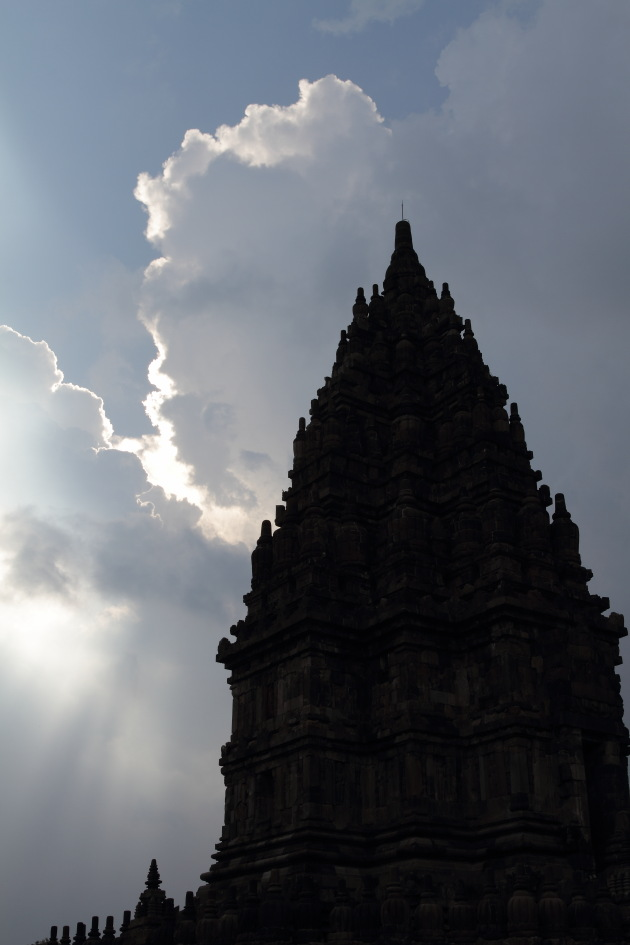
Everyone knows about the effects of Hinduism in Bali, but what will surprise most is that the Prambanan temple is the largest Hindu temple in Indonesia and it is located not in Bali, but in Central Java. It is also one of the biggest temples in South East Asia after Angkor Wat. Built in the 9th century, the Prambanan temple is a UNESCO World Heritage Site that is located just outside Yogyakarta in Indonesia’s Central Java.

Entering the Prambanan Temple Complex of Indonesia
This temple dedicated to Shiva, Vishnu and Brahma (the Trimurti) resembles most South Indian temples with a typical gopuram like architecture. It is part of an original set of 240 temples that include 3 Trimurti temples, 3 Vahana temples dedicated to Nandi, Garuda and Hamsa, 2 Apit temples, 4 Kelir temples, 4 patok temples and 224 Pervara temples.

One of the temples in the Prambanan Temple Complex, Indonesia
Today, 8 of the main temples, 8 smaller shrines and 2 out of the original 224 Pervara temples exist. And to see these temples, one needs to walk in between sunrise to sunset and the entry fee for a foreign national is 171,000 rupiah or USD 17. It is a quite a steep entry fee, but if you have time at hand, you will be able to explore this temple properly, including some of the smaller and untouched shrines, but I doubt if you will make full use of the entry fee. If you are wearing short clothes, the temple will provide you with a sarong to uphold the temple’s modesty rules.

Safety helmets worn by female tourists visiting the Siva complex in Prambanan
The best way to reach this temple is to hire your own motorbike or car and explore the temple complex at your own leisure. There are regular bus services too from Yogyakarta. The best time to visit this temple is around sunset time, when the sun casts a golden glow across the entire complex. I was here during sunset too, but unfortunately for me it was a cloudy evening.

The mighty old Prambanan Hindu temples in Indonesia
One of the main things to see while visiting this temple on a full moon night is the Ramayana ballet, a traditional Javanese dance performed on the west side of the temple and across the Opak river. Personally, I haven’t seen this Ramayana show, but have heard good reviews about it.

Mighty Visnu Temple in the Prambanan Temple Complex, Indonesia
Most of the Shiva temple is still off limits for the visitors due to safety reasons and the parts that are allowed to visit are under strict supervision. In whatever part of the Shiva temple that you can explore you will see stories of Ramayana carved on the inner walls, which you will understand properly if you see it in a clock wise sequence.

Sculptures on the Shiva Temple, Prambanan, Indonesia
While the Shiva temple is the largest, the other temples are equally beautiful. The Vahanas of the 3 main Hindu gods also have large temples dedicated to them. These temples are quite unique to Prambanan as even Hindu temples in India do not have such large temples for the Vahanas.

Continue Reading...

Wednesday, June 26, 2013

Balinese Temple Procession: Travel Photos and a Travel Video

Balinese culture is very unique. It is an interesting mixture of Hinduism from India and traditional animism and beliefs from Bali. The end product is Balinese Hinduism, which tourists from all over the world come to see and understand. Their temples, their dressing style, their traditions, their beliefs are all close to Hinduism, but still seems different.

Beautiful Bali Girls at Sukowati, Bali, Indonesia
I got to see some of this interesting Balinese culture live at the street in front of Sukowati market in Central Bali. There was long temple procession that passed right through the center of Sukowati. Apparently, this was a temple procession that takes place once every 6 months and hence there were a lot of attendees. Balinese men, women and children were decked up in traditional attire and gear. There was music, glamour and aura.


Balinese men play music during a procession at Ubud, Indonesia
Apart from finding this procession interesting, I hardly understood anything about the culture. I tried checking with locals, but got nothing much except for the fact that it is held once every 6 months. I hope you get to understand something from these travel photos and this video that I took of the temple procession. Even if you don't understand much, I hope it helps you see a bit of Balinese traditional attire and culture.

Colourful dressed Balinese Women in a temple procession at Sukowati

Balinese Men at Ubud, Bali

Temple procession at Sukowati, Bali

Continue Reading...

Pura Tirtha Empul: In Bali, but follows a tradition that is the norm in South Indian Temples

As a person who belongs to the Brahmin caste of Hinduism in South India, I have seen my fair share of orthodox Hindu rituals, traditions and culture that have been followed through generations. One such tradition involves bathing at all temple ponds, holy waterfalls, holy rivers and more. This culture is prevalent in other parts of India too, though is restricted to only some days. But, in South India, it is quite like the daily norm and people believe that if they have a bath in a holy river, they are cleansed off all their sins and also believe in the water giving them positive vibes.

Holy spring at Pura Tirtha Empul, Bali
And since it was the South Indian kings who brought Hinduism and Brahminism to Indonesia’s Bali, these traditions can be seen in Bali’s temples too. For a non-Hindu, such bathing scenes might amaze them. But, for me, who has seen this and participated in such rituals from childhood, this doesn’t seem odd. However, it is interesting to see such events take place in a country that is far away from India.

Rainy afternoon at Pura Tirtha Empul, Bali, Indonesia
Here at the Tirtha Empul temple, water from a holy spring is channeled through intricately carved aqueducts that are placed in the temple compound. People bring in their offerings, keep it next to the temple pond and enter the pond without any footwear. Then both men and women together have a dip in the pond and a shower at one of the many aqueducts. The belief in Bali is the same as in India where the holy water is supposed to cleanse them of their sins.

Taking a holy bath at the Pura Tirtha Empul, Bali, Indonesia
Once they have had their holy bath, they then go to inside the temple in wet clothes and offer their offerings and prayers to god. Generally this holy bath and temple visit is taken together with the entire family. In Bali, such activities happen more so during festivals and weekends.

Lord Indra at Tirtha Empul Temple, BaliThe Pura Tirtha Empul temple was built in the 10th century and is located at about 20 kms north of Ubud in central Bali. It has stunning location as it is surrounded by dense green mountains. The place is so nice that just opposite the temple, there is a resting house for the ex president of Indonesia and which is today used to host VIPs. If you want to some good architecture and a different culture, this is one temple you need to see. Entrance fees are 15,000 rupiah per person and if you are wearing short clothes, they will make you wear a sarong.

Continue Reading...
Logo Credits : Jobi T Chacko. UI/UX Credits : Murugan S Thirumalai
Copyright © 2009-2026 Sankara Subramanian C (www.beontheroad.com)
Reproduction without explicit permission is prohibited. All Rights Reserved

Join the Travel Club for FREE!!
and every fortnight get in your inbox...interesting experiential and off-beat travel stories , destination guides, handy tips (travel, photography and visa) based on personal experience, global vegetarian delights with helpful survival guides and gorgeous world travel images and videos as I (the Indian traveler) trot the globe! And a lot of other travel invites and soon to be launched goodies !

* indicates required
Close