Temples - Be On The Road | Live your Travel Dream!
none

Wednesday, September 17, 2014

Temple-Hopping in Southeast Asia

The wealth of beautiful sights and fascinating histories supplied by the temples of Southeast Asia will be enough to dazzle even the most seasoned traveler. No expense or time was spared in creating these monuments to spiritual belief, and their tremendous variety means there’s always something new to discover. 

Traveling in Southeast Asia
     
The bell shaped pagodas o Bagan, Burma

Most Southeast Asian countries are very welcoming to Western visitors and, because prices are low, they are a popular choice with backpackers. Many people choose to start in Pattaya, Thailand, where there are plenty of low-cost places to stay, and where the friendly locals guarantee a warm welcome. Once the journey starts in earnest, long-distance buses make it easy to travel between tourist sights, though some people prefer to hitch and get to know the locals, while others opt to cycle or ride motor scooters. While this article looks at some of the most spectacular places to visit, there are many smaller ones, including local village shrines dating back millennia.

When visiting temples, it’s important to note that many remain active places of worship, of deep importance to local people. One should normally remove one’s shoes before entering and make sure upper arms are covered, and women should be careful not to make physical contact with monks, even brushing past them, as this can be seen to compromise the monks’ religious purity.

Angkor Wat, Cambodia
     
 
Buddhist Monk poses in front of Angkor Wat

Probably the most famous temple complex in the region, Angkor Wat is built on ruins thought by some to be as much as 13,000 years old, one of the oldest manmade structures in the world. It was significantly extended in the 12th century on the orders of King Suryavarman II and is the largest religious monument anywhere in the world, so it can take days to explore it all. Although it may not feature the gold or bright colors of other temples in the region, its distinctive Khmer architecture has majesty of its own, looking particularly impressive at dawn and dusk.

Batu Caves, Malaysia
Hewn out of a limestone hill just north of Kuala Lumpur, these remarkable cave temples are really something different. They’re presided over by a towering golden statue of the war god Murugan (an avatar of Kartikeya) and entered via an equally towering set of steps. Inside, the immense caverns house a temple devoted to the monkey god Hanuman, and the Ramayana Cave has murals depicting the story of Rama. The best time to visit is during the festival of Thaipusam in late January or early February (heralded by the full moon), when local Tamils celebrate Murugan’s vanquishing of the demon Soorapadman.

Pura Luhur Uluwatu, Bali
A Kecak dance performance taking place at Uluwatu, Bali

Perched on a precipice above the breaking surf, Pura Luhur Uluwatu is visible for miles around. It was built in the 11th century, along with eight other temples, to protect Bali from evil spirits. The coral walls of its interior are covered in animal carvings (with both real and mythical beasts), and the Hindu people who worship there show respect for the local wild animals by bringing them food. Visitors are often invited to feed the monkeys. At sunset, people gather to watch the traditional Kecak dance in the temple grounds.

Shwedagon Pagoda, Myanmar
     
 
Shwedagon Pagoda - the pride of Myanmar

Dominating Yangon, the golden stupa of Shwedagon Pagoda, set atop Singuttara Hill, is an awesome sight and is surrounded by porticos of gold and white, each with its own elegant spire. It incorporates 90 tons of gold in all, plus a spectacular diamond. Inside, it’s just as magnificent, with many small but elaborate shrines and smiling Buddha statues, and it houses sacred relics of the Buddhas. At 2,600 years old, it is thought to be the oldest surviving pagoda in the world.

Wat Arun, Thailand
Wat Arun from the Chao Phraya River

The magnificent stepped pyramid of Wat Arun (also known as the Temple of Dawn) is covered in intricate carvings and surrounded by several galleries from which one can look down to the Chao Phraya river below. Brightly-colored porcelain tiles line its many roofs and prang (spires) and look dazzling in the sunlight. Its central Buddha, in the ordination hall, was created by King Rama II and guards his ashes. Below, six Chinese-style green granite pavilions welcome visitors who have crossed the water while, above, the seven-pronged Trident of Shiva pierces the sky.

Văn Miếu, Vietnam
     
 
Champa Kingdom Ruins at My Son, Vietnam

Also known as the Temple of Literature, this Confucian shrine remains an island of peace in modern Hanoi, its five courtyards are the perfect place to rest or simply to gaze in wonder. Less elaborate than the other temples listed here, it is no less impressive thanks to its elegant design, with red brick roofs curving like wings and long, low walls perfectly complemented by the surrounding foliage. It was built in 1070 to replicate the birthplace of Confucius, the Qufu temple in Shandong, China, and over the centuries it has served as a university for the religious and social elite. The best time to visit is at Tết, Vietnamese New Year (in late January or early February), when it fills up with calligraphers writing wishes as beautiful works of art.

Miagao Church, Philippines

One of the altars inside San Augustin Church, Manila, Philippines

This elaborate Baroque church, now listed as a World Heritage Site, represents the collision of Christian architecture in one of its most dramatic forms with the very different but equally magnificent traditions of Filipino art. Also known as Santo Tomas de Villanueva Parish Church and as the Fortress Church (since it was used to defend the town against Muslim raids), it was built in 1787 and has since survived full scale war, earthquakes and a massive fire. Inside is a gold-plated sanctuary that recalls the Buddhist and Hindu temples of the region.

Wat Rong Khun, Thailand
After closing hours at White Temple, Chiang Rai, Thailand

Looking like an elaborate snowflake, Wat Rong Khun is a modern structure very much in keeping with the spectacular tradition of temples in the region. It is almost entirely built of mirror glass and it sparkles a dazzling white, topped with intricate structures that give it an ethereal quality. It is entered via a bridge over a gleaming lake. Designed by the esteemed painter Chalermchai Kositpipat in 1997, it is dedicated to the Buddha but draws inspiration from a wide range of sources, with interior murals depicting Batman, Superman and scenes from the Predator movies.

Wherever you choose to go, there is no shortage of beautiful temples to discover in Southeast Asia, and visiting them will give you fresh insight into the dynasties and empires that have shaped this remarkable part of the world.

Continue Reading...

Thursday, October 17, 2013

Prambanan: Capital of Hinduism in Indonesia

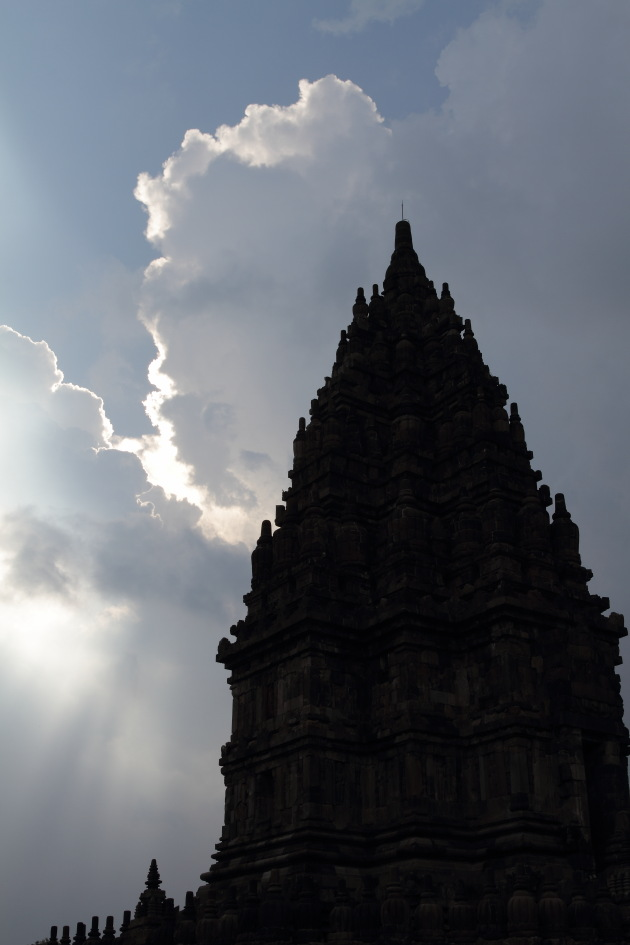
Everyone knows about the effects of Hinduism in Bali, but what will surprise most is that the Prambanan temple is the largest Hindu temple in Indonesia and it is located not in Bali, but in Central Java. It is also one of the biggest temples in South East Asia after Angkor Wat. Built in the 9th century, the Prambanan temple is a UNESCO World Heritage Site that is located just outside Yogyakarta in Indonesia’s Central Java.

Entering the Prambanan Temple Complex of Indonesia
This temple dedicated to Shiva, Vishnu and Brahma (the Trimurti) resembles most South Indian temples with a typical gopuram like architecture. It is part of an original set of 240 temples that include 3 Trimurti temples, 3 Vahana temples dedicated to Nandi, Garuda and Hamsa, 2 Apit temples, 4 Kelir temples, 4 patok temples and 224 Pervara temples.

One of the temples in the Prambanan Temple Complex, Indonesia
Today, 8 of the main temples, 8 smaller shrines and 2 out of the original 224 Pervara temples exist. And to see these temples, one needs to walk in between sunrise to sunset and the entry fee for a foreign national is 171,000 rupiah or USD 17. It is a quite a steep entry fee, but if you have time at hand, you will be able to explore this temple properly, including some of the smaller and untouched shrines, but I doubt if you will make full use of the entry fee. If you are wearing short clothes, the temple will provide you with a sarong to uphold the temple’s modesty rules.

Safety helmets worn by female tourists visiting the Siva complex in Prambanan
The best way to reach this temple is to hire your own motorbike or car and explore the temple complex at your own leisure. There are regular bus services too from Yogyakarta. The best time to visit this temple is around sunset time, when the sun casts a golden glow across the entire complex. I was here during sunset too, but unfortunately for me it was a cloudy evening.

The mighty old Prambanan Hindu temples in Indonesia
One of the main things to see while visiting this temple on a full moon night is the Ramayana ballet, a traditional Javanese dance performed on the west side of the temple and across the Opak river. Personally, I haven’t seen this Ramayana show, but have heard good reviews about it.

Mighty Visnu Temple in the Prambanan Temple Complex, Indonesia
Most of the Shiva temple is still off limits for the visitors due to safety reasons and the parts that are allowed to visit are under strict supervision. In whatever part of the Shiva temple that you can explore you will see stories of Ramayana carved on the inner walls, which you will understand properly if you see it in a clock wise sequence.

Sculptures on the Shiva Temple, Prambanan, Indonesia
While the Shiva temple is the largest, the other temples are equally beautiful. The Vahanas of the 3 main Hindu gods also have large temples dedicated to them. These temples are quite unique to Prambanan as even Hindu temples in India do not have such large temples for the Vahanas.

Continue Reading...

Tuesday, October 15, 2013

Gunung Kawi: Bali’s Rock Cut Temple

Bali is a land of wonders. It’s pristine beaches, its world famous surf, its rich underwater marine life and its amazing Hindu temples are what makes Bali so special. It’s Hindu temples, especially cast such a rich cultural look to this famous tropical beach getaway.

Rock cut temples in Gunung Kawi, Ubud, Indonesia
And these Balinese Hindu temples are so different from the Hindu temples of India, even though they originated from Indian Hinduism. One such interesting temple is Gunung Kawi, which has been cut on cliff rocks next to a river and a paddy field. This is a 11th century temple that is located about 40 minutes north east of Ubud in Central Bali.

Balinese kids praying at Gunung Kawi Temple
If I remember right, it costs about 15,000 rupiah for a foreign tourist to enter the temple. If you are not dressed appropriately, the temple association lends you a sarong to tie around your waist. The rest of the down hill passes through beautiful paddy fields and a small mountain river. The temple complex is built on each side of this river.

Paddy fields next to Gunung Kawi, Ubud, Bali, Indonesia
Unlike the rest of the temples in Bali, this temple does not feature a tiered umbrella design, but a single umbrella design and has intricate carvings of gods on the cliff that overlooks this temple. It has barongs similar to the rest of Balinese temples at the entrance of the main sanctum.

Rice Harvesting near Gunung Kawi, Bali, Indonesia
The best way to visit this temple would be by hiring a motorbike or a car and visit this temple along with others such as the Pura Tirtha Empul, Kintamani crater, Pura Ulan Batur at Kintamani and Goa Gajah near Ubud to name a few. The scenic drive to reach this temple also allows you to experience Bali’s green countryside.

Continue Reading...

Monday, September 02, 2013

Top 5 Temples of Thailand

When we think of Thailand, sumptuous Thai food, its great beaches and islands and its spiritual temples come to mind. It’s Theravada Buddhist culture and deep belief in spirituality has ensured that Thailand is home to some of the most vibrant and beautiful Buddhist temples. While there are many beautiful Buddhist temples across the length and breadth of Thailand, here is my list of top 5 temples of Thailand.

Wat Arun, Bangkok
Steep Flight of Stairs that lead to the top of Wat Arun
This temple doesn’t need an introduction. It is so popular that is on the 10 baht coin. This temple known as the ‘temple of dawn’ towers on the Thonburi west bank of the Chao Phraya river in Bangkok. Apart from this 17th century, which is beautiful in itself, there are 2 things that make Wat Arun such a hot favorite. One,  the first rays of the rising sun on the temple from the Chao Phraya river is a sight to behold. Second, the steep flight of steps that leads to a sensational view of Bangkok’s river side. You can either take a short boat ride or a longer route by road to reach this striking Bangkok landmark.

Wat Phra That Doi Suthep, Chiang Mai
Even though Chiang Mai is a very famous temple city in itself, its most popular temple is located about 15 kms from the city and on a mountain called Doi Suthep. This temple, sacred to many Thai people, offers stunning views of the Chiang Mai city and is especially popular during sunsets. This 14th century temple is built on principles derived from Buddhism and Hinduism. Everything in the temple is gold plated and that includes its pagodas, statues, bells and shrines. This temple also carries a model of the revered Emerald Buddha.

Big Buddha Temple or Wat Phra Yai, Ko Samui
Most of the tourists visiting Ko Samui, do so for its beautiful beaches, but there is a deep Buddhist side to this tropical island too. And this can be seen through its most visible landmark, the Big Buddha temple that can be seen when people fly into Ko Samui. This temple with the 12 meter seated Buddha statue is situated on the north east corner of the island on Koh Faan that is connected to Koh Samui by a causeway. The Buddha here is seated in the Mara posture that symbolizes steadfastness, purity and enlightenment. All the Ko Samui hotels would happily arrange a tour if you are interested in visiting this iconic Ko Samui landmark.

White Temple (Wat Rong Khun), Chiang Rai
Reflections of the White Temple, Chiang Rai
This has got to be the prettiest temple in the whole of Thailand even though it is a contemporary and unconventional Buddhist temple. Like the name suggests, everything in this temple is white in colour. Be it the fish in it ponds, the statue of Buddha, its carvings, its walls and all its stupas, everything is white. The special aspect of this temple is the creative imagination that was used by its designer Chalermchai Kosipipat. The construction of this temple began in 1997 and is still in construction, though tourists and devotees are allowed to visit.

Ayutthaya Historical Temple Complex, Ayutthaya
One of the temples in the Ayyuthaya historical park
The ancient capital of Thailand is Thailand’s temple center. There are so many beautiful temples here that one can get lost in temple lore for a long time. The rich history and its ancient feel is what draws people from far and wide. Whether it is the Phra Chedi Chaimongol temple, the sleeping Buddha, Wat Phra Si Sanphet, Wat Phra Mahathat or Wat Ratchaburana, all the Ayutthaya tours have a lot of stories to share. Its vast ruins give you an idea of its majestic past and a guided tour over a long duration can help you transfer yourself to an Ayutthaya era.

Continue Reading...

Wednesday, June 26, 2013

Pura Tirtha Empul: In Bali, but follows a tradition that is the norm in South Indian Temples

As a person who belongs to the Brahmin caste of Hinduism in South India, I have seen my fair share of orthodox Hindu rituals, traditions and culture that have been followed through generations. One such tradition involves bathing at all temple ponds, holy waterfalls, holy rivers and more. This culture is prevalent in other parts of India too, though is restricted to only some days. But, in South India, it is quite like the daily norm and people believe that if they have a bath in a holy river, they are cleansed off all their sins and also believe in the water giving them positive vibes.

Holy spring at Pura Tirtha Empul, Bali
And since it was the South Indian kings who brought Hinduism and Brahminism to Indonesia’s Bali, these traditions can be seen in Bali’s temples too. For a non-Hindu, such bathing scenes might amaze them. But, for me, who has seen this and participated in such rituals from childhood, this doesn’t seem odd. However, it is interesting to see such events take place in a country that is far away from India.

Rainy afternoon at Pura Tirtha Empul, Bali, Indonesia
Here at the Tirtha Empul temple, water from a holy spring is channeled through intricately carved aqueducts that are placed in the temple compound. People bring in their offerings, keep it next to the temple pond and enter the pond without any footwear. Then both men and women together have a dip in the pond and a shower at one of the many aqueducts. The belief in Bali is the same as in India where the holy water is supposed to cleanse them of their sins.

Taking a holy bath at the Pura Tirtha Empul, Bali, Indonesia
Once they have had their holy bath, they then go to inside the temple in wet clothes and offer their offerings and prayers to god. Generally this holy bath and temple visit is taken together with the entire family. In Bali, such activities happen more so during festivals and weekends.

Lord Indra at Tirtha Empul Temple, BaliThe Pura Tirtha Empul temple was built in the 10th century and is located at about 20 kms north of Ubud in central Bali. It has stunning location as it is surrounded by dense green mountains. The place is so nice that just opposite the temple, there is a resting house for the ex president of Indonesia and which is today used to host VIPs. If you want to some good architecture and a different culture, this is one temple you need to see. Entrance fees are 15,000 rupiah per person and if you are wearing short clothes, they will make you wear a sarong.

Continue Reading...
Logo Credits : Jobi T Chacko. UI/UX Credits : Murugan S Thirumalai
Copyright © 2009-2026 Sankara Subramanian C (www.beontheroad.com)
Reproduction without explicit permission is prohibited. All Rights Reserved

Join the Travel Club for FREE!!
and every fortnight get in your inbox...interesting experiential and off-beat travel stories , destination guides, handy tips (travel, photography and visa) based on personal experience, global vegetarian delights with helpful survival guides and gorgeous world travel images and videos as I (the Indian traveler) trot the globe! And a lot of other travel invites and soon to be launched goodies !

* indicates required
Close