Bhubaneshwar - Be On The Road | Live your Travel Dream!
none

Friday, March 29, 2019

Bhubaneshwar Heritage Walk: Lose yourself in 1300 years of temple and cultural magic
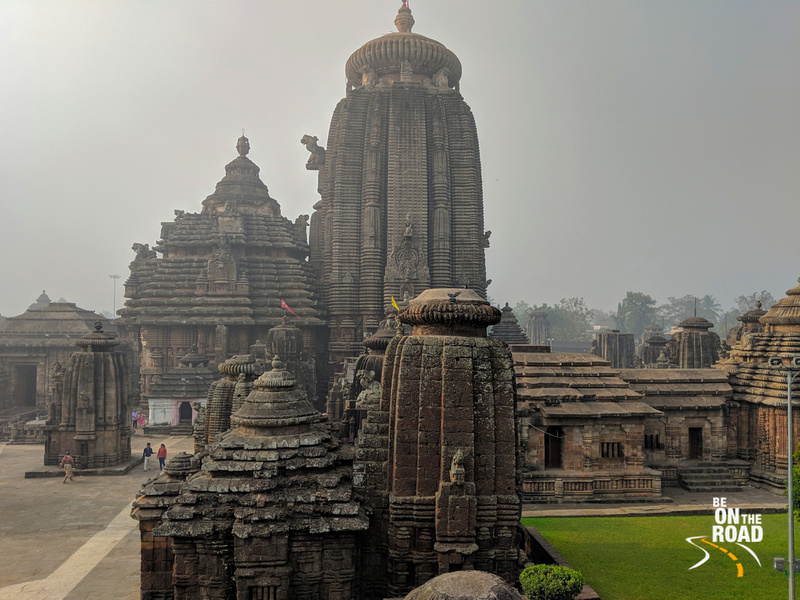
The stunning Linagaraj temple of Bhubaneshwar

Some of India’s richest art, culture and history is depicted in its gorgeous temples. These temples, which have weathered the test of time, speak of amazing stories from our glorious past. One such group of temples that speak beautiful stories are the temples from the Kalinga empire that are located in Bhubaneshwar, the capital city of Odisha.

Bhog ready to be served to the lord at Ananta Basudev temple, Bhubaneshwar

These temples, which are part of a cultural and heritage trail in Odisha are best explored by foot and that too early in the morning. On my recent cultural holiday to Odisha, I ended up going on one such morning heritage walk with Ekamra Walks (run by the government of Odisha) and boy was it an enlightening experience.


When  you enter this part of Bhubaneshwar old town just before sunrise, most of these temples are shrouded in mist. And as the sun rises up, these temples make a grand appearance from under the mist and a diverse set of people go about their yoga, walking, jogging, morning shopping at the street food markets and offer their prayers to the lord.

Beautiful carvings at 7th Century Parasurameswar Temple, Bhubaneshwar, Odisha

And then there are some like us who are in the old town with a spring in our steps, a sparkle in our eyes and a camera in our hand, eager to explore the art, history and culture of these utterly beautiful temples.

Early morning market scenes in front of Lingaraj temple, Bhubaneshwar

This two hour long Bhubaneshwar heritage walk begins at 10th century Mukteswar temple that is considered the gem of Odishan architecture and from there meanders its way through narrow lanes lined with trees and old structures to the 7th century Parasurameswar temple, Kotitirtheswar temple, Bindusagar lake, the busy kitchen at Ananta Basudev temple, the British era Dharamshala, the colorful street market called Ratha Danda, the elevated platform offering a panoramic view of the Lingaraj temple campus, 13th century Sari Deul temple and matha before finishing the walk at Vaital temple and the herbal medicinal garden called Ekamravan.


While the entire heritage walk offers a splendid experience, there are some highlights that you should not miss. And more so, you should keep your ears open and listen to your Ekamra guide when you are at these spots.

Stunning Filigree work on the walls of the Mukteshwar Temple, Bhubaneshwar, Odisha

These highlights are:

1) The stunning archway, intricate carvings, sculpting and filigree designs at Mukteswar temple

2) The preparation of the morning bhog in the temple kitchen of Ananta Basudev temple

3) The view of the Lingaraj temple from the elevated platform

4) And the fact that most of this Bhubaneshwar old town was a prototyping ground for the temple architects of that era, which you can see through the many small temples built in such a small area

The arched gateway that greets visitors entering the Mukteswar Temple of Bhubaneshwar, Odisha

While you will spend most of your time at Mukteswar temple as this is the most beautiful and well preserved temple, I loved every bit of the Bhubaneshwar heritage walk and hoped to spend quality time almost at all pit stops.

Lingaraj Temple in the early morning sun

The mythological stories of the formation of Bindu Sagar lake, the sheer early morning cooking action at Ananta Basudev temple, the simple charm of the dharamshala for the pilgrims, the colorful vegetable sellers and the locals haggling for the prices, the sheer divinity at Lingaraj temple, the tantrik practices of Vaital temple and so many other rich experiences can be made while walking though this paragon of beautiful history.

Bindu Sagar Lake, Bhubaneshwar

This heritage walk run by Ekamra and their very knowledgeable guides make the overall cultural and heritage experience so much richer. Not only can you stare at the beautiful pieces of stone, but you can even listen to their astounding meanings and stories when explained by the Ekamra guides. And some of these stories will really blow your mind and certainly captivate everyone’s imagination.

Mukteshwar Temple and pond covered in mist

And once you get a good lay of the land and get to understand its hidden riches, you can make many other morning trips just to amble around 1400 years of heritage and may be even indulge in some quality photography and videography.

Lion-Elephant combo animal on the walls of Mukteshwar Temple, Bhubaneshwar

You can either go on this temple walk at the beginning of your trip or at the end after exploring Puri, Konark, Cuttack, Chilika lake and other hotspots. Or you can even do it on a short weekend trip to Bhubaneshwar. But, whatever you do, do not miss out on experiencing this rich temple heritage from India’s glorious past. It is a must experience for all temple, art, culture, heritage and travel lovers!

Traditional Kitchen of Anant Basudev Temple, Bhubaneshwar

Key points to remember:

1) Bhubaneshwar can get quite hot during the non winter months. Hence, it is recommend to carry a hat, umbrella, a small bottle of water and sunglasses to protect yourself from the elements.

2) Wear comfortable shoes as you will be walking about 3 kms in total.

3) Wear decent clothing as most of these places on the heritage trail are still working temples.

4) No mobile phones, cameras, leather goods and bags are allowed inside Lingaraj temple. There are lockers where you can keep your belongings for safekeeping.

5) Non Hindus are not allowed inside Lingaraj temple.

The musician and his tabla - Bhubaneshwar heritage walk

Timings for the Bhubaneshwar Heritage Walk organized by Ekamra

The temple walk is organized every Sunday at 6:30 AM. The walk is free of cost, but one has to register online at Ekamra Walks website.

Their other heritage walks:

The Khandagiri and Udayagiri cave walk is organized every Saturday at 6:30 AM.

The Musueum walk at Kalabhoomi is organized every Sunday at 3:30 PM.

The intricately carved ceiling of Mukteshwar Temple, Odisha

How to get here:

Bhubaneshwar is well connected by air, rail and road with all of India and thus reaching this city isn’t a problem. The Bhubaneshwar old town is just a 10 minute drive from the airport and easily accessible from most places in the city.

Standing proud - Mukteshwar Temple, Bhubaneshwar, Odisha

Best time to go on this heritage walk:

It is best to start this walk just before sunrise to make the best use of lack of crowds, good weather and for street market action. One can also go around sunset time for a different experience.

Summers in Bhubaneshwar can get seriously hot, so it might be prudent to plan your trip during non summer months. The heritage walk is a joy during the rains and the cold winter months.

Garbha Griha - Mukteshwar Temple, Bhubaneshwar

Where to stay:

Bhubaneshwar has plenty of stay options – from luxury hotels to traditional homestays and budget guest houses. If you wish to visit the temples often, it is advised to stay closer to the old town.

Bhog being prepared at Anant Basudev temple, Bhubaneshwar

Nearby Tourist Attractions:

1) The ancient cave temples of Udayagiri and Khandagiri

2) The coastal temple town of Puri

Early morning magic at Mukteshwar Temple, Bhubaneshwar

3) The Sun temple of Konark

4) The chandua artisans of Pipili

5) The heritage village of Raghurajpur

Plethora of small temples in the Mukteswar Temple complex, Bhubaneshwar

6) The sound and light show at Dhauli Stupa

7) The authentic Odisha Rasgula experience at Pahala

Continue Reading...

Wednesday, February 27, 2019

Story of King Ashoka through the Light and Sound Show at Dhauli Stupa, Odisha

Dhauli Stupa, Odisha

King Ashoka or Ashoka the Great, was one of India’s greatest kings. The grandson of Chandragupta Maurya, the founder of the Maurya dynasty, King Ashoka ruled almost all of the Indian subcontinent from 268 to 232 BC. From Afghanistan in the west to Bangladesh in the East and from Kashmir in the north to Tamil Nadu, Karnataka and Kerala in the South, his empire’s reign was absolutely massive. The turning point in his life came right after he won the bloody Kalinga (the land we know as Odisha today) war. He was deeply affected by all the bloodshed and that is when he made the switch to Buddhism and became one of the strongest preachers and ambassadors of Buddhism in the world. It was because of him that Buddhism spread to Sri Lanka, Thailand, Myanmar, Tibet, China, Laos, Cambodia, Vietnam, Indonesia and other countries in the far east.

King Ashoka edicts on Dhauli hill

As Indians, we have learned and read about him in our schools and books and see his influence on our Indian flag, our currencies and at many other locations across the country (I am referring to his emblem as seen on Sarnath’s Ashoka pillar). But, nothing comes close to the experience of transporting yourself 2,500 years to the time where lands were known as Kalinga, Magadh, Patliputra, etc. and re-living the life of one of the greatest kings the planet has ever known.

Story of King Ashoka on Dhauli Stupa, Odisha

One of the best places to have this experience is Dhauli Stupa, the place from where you can see the Kalinga battlefield and the place where King Ashoka left his violence behind and embraced the guidance and teachings of Lord Buddha. This story is told every evening at Dhauli Stupa through a spectacular light and sound show. Created by renowned Russian artist Maria Rud and local sand artists, this visual and auditory treat carries the iconic voice of Om Puri (in Hindi), Kabir Bedi (in English) and Bijaya Mohanty (in Odia). During this show, the white peace pagoda of Dhauli is morphed into a fast moving mural canvas with the latest 3D projection mapping technology and 5.1 surround sound. It is a must experience for all visitors on a holiday to Odisha!

Below is the entire light and sound show in 3 video parts for all those who cannot travel to Dhauli and experience it in person. Do watch it on big screens with highest resolution and good quality sound system to appreciate it more. I took all three videos using my Google Pixel 2XL mobile phone.

P A R T 1


P A R T 2


P A R T 3


Timings: There are 2 shows every day. One at 6 PM and the other at 6: 45 PM. The show lasts a total of 35 minutes

Cost: The ticket for each adult costs INR 25 and INR 10 for students

How to reach there: Bhubaneshwar is your nearest airport, railway station and bus hub. You can reach Dhauli by road in about 60 minutes from Bhubaneshwar. You could either hire an auto rickshaw or car for the commute. There are a few steps that one has to climb to reach Dhauli hill from the parking lot.

Best Season: Winter would be the ideal season to see this show as temperatures would be very pleasant.

Continue Reading...

Saturday, July 10, 2010

The Kalinga Battlefield!!

This was where the in-famous Kalinga battle was fought and this was where a lot of blood was shed. We are in the plains of Dhauli in the Khurda district of Orissa with the Daya river meandering close by.

Daya River and the Kalinga Battlefield
Today, the entire Dhauli plains are a picture of greenery and is prime agricultural land. The Daya river is the source of water for such agricultural activities.

Lush green paddy fields at Kalinga land
These plains are quite a stark contrast from ‘long long ago’ to ‘not so long ago’. The history books dub this place as the ‘goriest’ battlefield in Orissa, but today, this place looks the most green and peaceful place in and around Bhubaneshwar.

Enhanced by Zemanta

Continue Reading...

Friday, July 09, 2010

Dhauli Hill (Dhaulagiri), Orissa, India

Lord Buddha used to preach here. His preaching's were so strong that King Ashoka renounced war and embraced Buddhism.

Sanchi Stupa at Dhauli Hill
Situated on the banks of the Daya river and at about eight kilometres from Bhubaneshwar, Dhauli is the place where the gory Kalinga war was fought in 261 B.C. Today, Dhauli doesn’t look gory at all. Instead, it is a picture of greenery, peace and serenity.

Peace Pagoda at Dhauli Hill
The Peace Pagoda built by the Japanese Buddhist Sangha stands tall on a hill and overlooks the entire Dhauli plain. This peace pagoda houses various statues of Lord Buddha and visually depicts stories of the Kalinga War and King Ashoka’s conversion to Buddhism.

Lord Buddha at Dhaulagiri
Dhauli hill has major edicts of King Ashoka engraved on a mass of rock, by the side of the road leading to the summit of the hill.

Stories on Buddhism engraved on the walls of Dhaulagiri
The Dhauli edicts are written in the Prakrit language using the Brahmi script. It is here that Emperor Ashoka declared his doctrine of paternalism, accepting all men as his children, urging his administrators at Toshali to work for the welfare of Kalinga.

King Ashoka and his path to Buddhism 
One can also get excellent view of the plains of the Daya river where the Kalinga war was fought from the top of the Dhauli Hill. A lot of ‘speaking’ stone panels adorn the peace pagoda. These include the reclining Buddha, an elephant procession, the Bodhi tree, footprints of Buddha bearing the chakra (wheel), a sleeping beauty fanned by female attendants, procession on horse back, and Emperor Ashoka renouncing war by offering his sword to Lord Buddha at Dhaulagiri Hill.

Dhaulagiri Sanchi Stupa 
Dhauli Hill and the Peace Pagoda let one get a glimpse of India’s and Buddhism’s history and also allows one to admire nature’s beauty here.

Enhanced by Zemanta

Continue Reading...

Tuesday, July 06, 2010

Rajarani Temple – A Kalinga Episode!!

The Rajarani Temple, located towards the north-east of Lingaraj temple and situated in the heart of Bhubaneshwar city, is one of the most beautiful temples representing a unique experiment in the field of architecture in Orissa.

Amazing Temple Site of Rajarani Temple at Bhubaneshwar, Orissa
This temple is remarkable for its sculptural excellence, profusion of ornaments, exuberant architectural features and multiple scroll work.

Rajarani Temple, Bhubaneshwar, Orissa
This was my 2nd visit to this temple and I was extremely happy to see the temple maintained well. The Archaeological Society of India has done a commendable job of preserving the temple.

Carvings and Sculptures of the Kalinga times
After buying my entrance ticket worth five rupees, I entered the lush green lawns of the temple campus on a cloudy day. The Rajarani Temple, from the entrance, forms a picturesque setting amidst the green lawns.

A Kalinga Episode 
The present name ‘Rajarani’ has been derived from a very fine grained yellow sandstone called ‘Rajarania’ in common parlance with which the entire edifice has been built. Mellowed by time, the glaring amber of the stone complements its architectural splendour.

Exquisite Temple Architecture
This temple built between the 10th and 11 century was initially known as Indreswara temple devoted to the worship of Lord Shiva though the temple oddly lacks in a presiding deity.

Rajarani Temple under cloudy skies
Facing east, this temple consists of a sanctum (deul) and a porch (jagamohana) raised above a platform of three mouldings is pancharatha in plan with a curvilinear superstructure (rekha shikhara) reminiscent of Kandariya Mahadeva temple of Khajuraho. This temple marks yet another phase in the evolution of Orissan temple architecture.

Intricate carvings at Rajarani Temple
As I was exploring this temple compound and studying the various carvings and sculptures, the energetic sculptures adorning the walls of the deul caught my attention.

Kalinga Architecture at Rajarani Temple
These energetic sculptures were that of women in dance poses that hint at the practice of Odissi dance, coquettish women, women carrying children, looking at their reflection in the mirror or playing becomingly with birds and nature.

Rajarani Temple - A different view 
The other attractive components of the temple are the ‘Guardians of the Eight Directions’ projecting from the base of the temple in the eight directions, starting from the gateway in a clockwise direction around the porch and the deul to end back at the torana.

Rajarani Temple at Bhubaneshwar
The eight guardians here are Indra (god of rain), Agni (god of fire), Yama (god of death), Nirriti (god of suffering), Varuna (god of ocean), Vayu (god of wind), Kubera (god of wealth) and Ishana (Shiva).

Rajarani Temple under cloudy skies 
This temple and its lovely architecture really take’s ones imagination into India’s glory past. I would recommend this temple visit to all Indian temple lovers and for people who have a keen eye for architectural wonders.

Continue Reading...
Logo Credits : Jobi T Chacko. UI/UX Credits : Murugan S Thirumalai
Copyright © 2009-2026 Sankara Subramanian C (www.beontheroad.com)
Reproduction without explicit permission is prohibited. All Rights Reserved

Join the Travel Club for FREE!!
and every fortnight get in your inbox...interesting experiential and off-beat travel stories , destination guides, handy tips (travel, photography and visa) based on personal experience, global vegetarian delights with helpful survival guides and gorgeous world travel images and videos as I (the Indian traveler) trot the globe! And a lot of other travel invites and soon to be launched goodies !

* indicates required
Close