Africa - Be On The Road | Live your Travel Dream!
none

Tuesday, April 05, 2022

The Colourful Samburu Tribe of Kenya: A Travel Photo Series
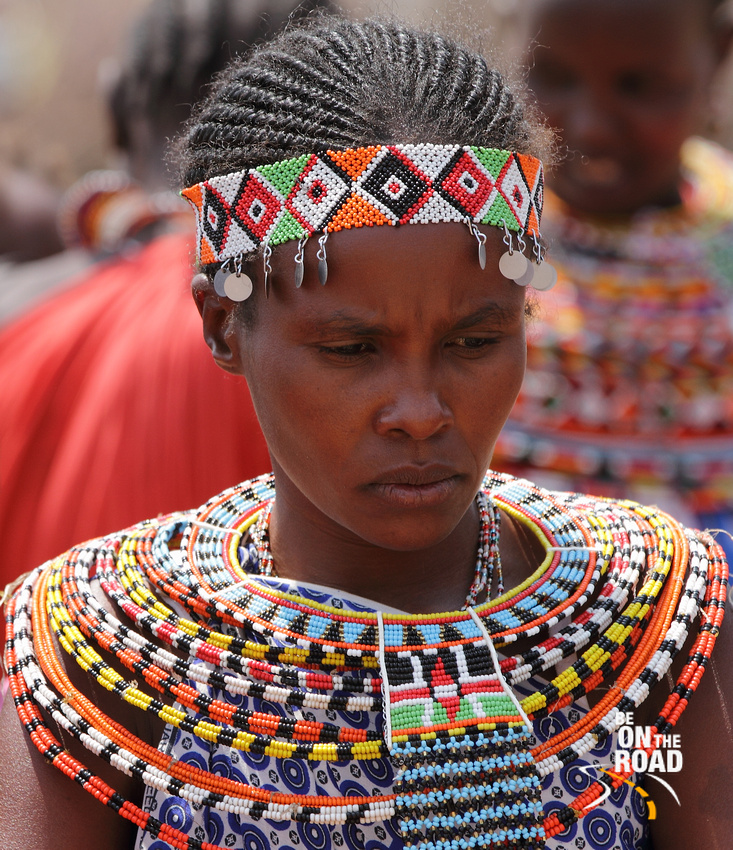
A Beadwork Samburu Model, Kenya

They are related to the famous Maasai tribe living in the Maasai Mara game reserve in Kenya. They are one of the more dominating tribes of north-central Kenya. They are semi-nomadic pastoralists who mainly herd cattle, but also keep sheep, goats and camels. I am talking about the colourful Samburu tribe who live north of the equator in Kenya and live in very diverse and beautiful landscapes that span high altitude forests, open plains, semi-arid grass and bush land to complete desert. One of their main settlements is on the fringes of Samburu National Park in North Kenya and this is where I met them. Experiencing the Samburu National reserve and the Samburu tribe becomes a beautiful one-two combo for a rich wildlife and culture experience.

This travel photo series aims to share with you the colourful personalities and traditional life of the beautiful Samburu tribal people. Hope you enjoy these vibrant visuals of these gorgeous tribal people of Kenya.

Above picture: The Samburu tribe is known for its colourful beadwork jewellery. Here you can see a Samburu woman wearing such colourful head and neck bead jewellery.

A Portrait of a Samburu Man

Above picture: Samburu men also adorn themselves with such colourful bead jewellery making them fantastic looking male models too.

Exquisite bead work on this Samburu woman

Above picture: Here is another Samburu tribal woman sporting colourful beadwork necklace, ear rings and head gear. The concentric rings on the necklace makes her look similar to the long necked Karen tribal women of Myanmar, but thankfully their necks have not been lengthened.

This game played with seeds and compartments is only played by the elderly men of the Samburu tribe

Above picture: Seen in this photo is a game with seeds and compartments played only by the elderly men of the Samburu tribe. This game is very similar to Pallanguzhi, a traditional ancient mancala game played in South India, especially Tamil Nadu and Kerala.

A rich dash of colour on all the Samburu women

Above picture: It is said that the more beads or necklaces are there on a woman, the more beautiful she is considered. Another point on the same line of thought is that, women wore more necklaces as they got richer. Therefore, the number of beads or necklaces indicate status in society, richness level and beauty.

Inquisitive Samburu looks

Above picture: The Samburu people speak the Samburu language, which is a Nilo-Saharan language. Their language is more or less similar to Maa (the language that the Maasai speak). The Samburu tongue is also related to Turkana and Karamojong and more distantly to Pokot and the Kalenjin languages.

Young Samburu Kids strike different poses

Above picture: Like all kids, the Samburu kids are also full of energy and innocent smiles. They can be seen wearing Western attire.

Samburu Elders huddle together under a tree to play a game

Above picture: The elders occupy a very important role in the Samburu society and all the power rests with them. They have a polygamous system where the elders decide who can marry and can have how many wives. This kind of control keeps trouble at rest or at least that is the belief.

The Samburu Warriors strike a pose

Above picture: In the Samburu tribe, the men take care of security, cattle herding and playing mock fight games to improve their warrior skills.

The colourfully decked Samburu tribals

Above picture: While the Samburu women take care of things like building houses, collecting firewood and food from the forest, cooking food, taking care of the young ones and in doing craftsmanship.

Wedding dance enacted by the Samburu men and women

Above picture: The Samburu love to sing and dance, but traditionally use no instruments. They have dances for various occasions of life. The men dance jumping and high jumping from a standing position is a great sport. Most dances involve the men and the women dancing in their separate circles with particular moves for each sex, but coordinating the moves of the two groups. A lot of their dances involve elaborate movements of their chest.

A Mean Samburu Warrior look

Above picture: Girls get married pretty early. Sometimes before they turn 18. Both boys and girls go through an initiation into adulthood, which involves training in adult responsibilities and circumcision for boys and clitoridectomy for girls. Ouch!

Samburu Women welcome the tourists into their village

Above picture: If you wish to marry a Samburu woman, all you have to do is give the chief of the village 2 cows. That is how weddings happen in the Samburu culture.

Women work much harder than the men in the Samburu community

Above picture: The hard working Samburu woman. She works in the forest, inside the house and in the manyatta or settlement.

A Samburu house made from wood, mud and plastic (for the roofing)

Above picture: A typical Samburu house is built by the wives of that house using sticks, mud, dung and plastic (for waterproofing).

Continue Reading...

Monday, September 06, 2021

Lake Nakuru National Park: Kenya’s Diverse Ecological Hotspot

Lesser Flamingos and their reflections on the waters of Lake Nakuru

It is a place where one can see the most fabulous bird spectacle in the world. It is a national park where one can spot most of Africa’s rich wildlife. It is one of Kenya’s two premium national parks and is a bird lover’s paradise. I am talking about Lake Nakuru national park, a Ramsar Wetland that is nestled in the vast great Rift valley.
   
A large herd of Rothchild's Giraffe at Lake Nakuru National Park     
    
Designated by UNESCO as one of Kenya’s lakes system world heritage sites, Lake Nakuru National Park is home to one of the world’s highest concentrations of the Black Rhinoceros. It’s ecosystem is comprised of lake surrounded by wooded and bushy grasslands. The lake is saline, which allows growing of many types of algae and the surrounding grassland is made up of highly adaptable alkaline grasses.   
   
The road that connects Lake Nakuru to Baboon's cliff     
    
It is this diverse ecosystem that makes it an important pitstop on the African – Eurasian migratory flyway. The star bird attractions are the Greater and the Lesser Flamingos, but one can also see yellow-billed storks, marabou storks, hammerkops, fish eagles, helmeted guineafowls, great white pelicans, African spoonbills, grey headed gulls, super starlings and close to 400 species of birds .
   
Lake Nakuru sees the largest concentration of flamingos in Kenya     
    
In terms of the other wildlife, one is guaranteed to see white rhinos, African buffalos, Rothschild giraffes, zebras, impalas, olive baboons, velvet monkeys, waterbucks, hippopotamuses, hyenas and jackals. And if you are lucky, you might even get to see lions, leopards, black rhinos, wild dogs, colobus monkeys and cheetahs. Apart from the African elephants, one can almost see all of Africa’s rich wildlife if they are staying inside the park for a few days.    
   
Cuddling Zebras at Lake Nakuru National Park, Kenya     
    
It is this insanely beautiful combination of plants, birds and rich wildlife that make Lake Nakuru national park so special. Add to it, its dusty jeep safaris and the panoramic vistas from Baboon cliff, Out of Africa and lion hill and you have a stunning African wildlife destination.    
   
Impala feeding at Lake Nakuru National Park, Kenya     
    
A wildlife safari at Lake Nakuru national park begins by the lake side at around sunrise. As the mist lifts from the surface of the water, you get to see a large maze of pink in the horizon. As the mist goes up and the golden rays of the sun fall on it, your eyes get treated to millions of lesser and greater flamingos that feed on the algae. And when you get closer to these gorgeous birds, you will see them take to the air, in the thousands together before descending on another stretch of the lake to continue feeding there. And this process continues, making for a fabulous spectacle.    
   
Great White Pelicans in the shallow waters of Lake Nakuru     
    
Once you move your attention away from the flamingos, you will notice the thousands of other water birds sharing the waters of the lake. They might not be as great a spectacle as the pink flamingos, but they offer diversity and fill up new colours in your viewfinder. And then there are the water buffalos that can be seen sharing the waters too.
   
Cape Buffalos seen from on top of Baboon's Cliff     
    
And you make your way into the woodlands, you will come across more grazers like the impalas, the black and the white rhinoceros and finally the gorgeously printed Rothschild Giraffe chomping on the juicy leaves of the trees in the woods.

Sub -Adult White Rhinoceros looking at us     
    
In between, you can also lay your sights on rowdy olive baboon families or the more playful black velvet monkeys. And if you get lucky, you might be able to spot some apex predators such as the leopards, cheetahs, lions or wild dogs.
   
The flamingos grab all the photographer's attention at Lake Nakuru     
    
And if you have some snacks or a picnic lunch with you, you can drive to the panoramic view points and enjoy the beautiful views at high noon while relishing a much needed bite after a whirlwind morning full of bird and animal sightings. These view points are also a great place to get a bird’s eye view of this diverse ecological hotspot while enjoying the cooler breeze during the hot part of the day.
   
A Group of Great White Pelicans and African Spoonbills     
    
As the sun starts making its way down, you can return to the woodlands, grasslands or the lake for more wildlife action before retiring to your place of stay within the national park or head out of the gate to the land beyond. And did I tell you that you can also go on a hike to a waterfall here. It is called Makalia falls and it carries decent amount of water during the wet season.
   
Locals admiring the view from Baboon's cliff     
    
Lake Nakuru national park is nothing short of wild miracle. It is one of Kenya’s most diverse ecological hotspots and a place that I much recommend for all wildlife and bird lovers. Do ensure that you stay here for at least two days so that you give yourselves the best chance to see all of its magic.     
   
An Olive Baboon family     
    
Fees and permits:

The fee per foreign national adult is USD 60 and USD 35 per foreign national child or student. If you are foreign adult residents of Kenya, the fee is KSH 1030 and KSH 515 for child or student.

Cape Buffalo rests in the swamp land of Lake Nakuru

In addition to the entry fees, there is a vehicle fee too and that depends on the vehicle and its number of seats. 
   
Superb Starling at Lake Nakuru National park, Kenya    
    
How to reach:      
     
If you are driving from Nairobi, take the Naironi-Nakuru highway. This is a scenic route and will give you good views of the Rift valley and the volcanoes. The total distance is 168 kms and will take you about 3 hours. It is best to have your own mode of transportation.

If you wish to fly, it is a 25 minute flight from Nairobi to the Naishi airstrip inside the national park.    
   
Yellow-Billed Stork at Lake Nakuru National park, Kenya

Best season to visit:    
    
The best season to visit Lake Nakuru national park is between July to December or January to March. These months also happen to be the peak tourist season and the dry season.

If you don’t mind some rains, you can visit during the other months of the year. These months also happen to be the low season.   
   
Hamerkop near the lake fringes - Lake Nakuru National park, Kenya

Where to stay:    
    
If you wish to stay inside the park, your only options are five star hotels. If you are okay with staying outside the park boundary, you will find budget hotels and backpacker hostels. There are also special and public campsites where you can pitch in your own tents. These campsites are basic, but they offer a stay in the wild experience.

If you are on a full on wildlife experience, I would recommend staying at the five star hotels so that you don’t have to drive long distances every day and can spend more time spotting and photographing wildlife. If budget is an issue, then you will have to stay outside the park. But, you can compensate by walking up real early in the morning to make it to the core of the national park at sunrise.   
   
Grey-headed gull - seen quite commonly around Lake Nakuru

Where to eat:    
    
There are a few restaurants outside the park boundary where you can find some basic food options. Your best bet for food would be your place of stay. And self-cooking in case you are camping.

Nakuru town is a good option in case you wish to indulge in local cuisine at local prices.
   
An African Spoonbill standing on one leg at Lake Nakuru national park, Kenya

Other wildlife reserves nearby:    
    
1) Hell’s Gate National park: A small national park known for its wide range of wildlife and for its cliff scenery

2) Lake Naivasha: A fresh water lake that is part of the Great Rift valley and that is home to more than 400 species of birds and a sizeable population of hippos

Black Faced Vervet Monkeys: Inquisitive brothers

3) Aberdare National Park: A high altitude national park that is home to a large variety of birds and mammals

4) Mount Kenya National park: A high altitude national park and a UNESCO World Heritage site

5) Maasai Mara: The 8th wonder of the world and home to one of the greatest wildlife migration in the world

6) Samburu National Reserve: An oasis of wildlife in arid North Kenya

7) Lake Elmenteita: It is a Ramsar site, an UNESCO World heritage site and home to over 400 species of birds
   
Marabou Stork gets ready to eat its prey at Lake Nakuru National Park, Kenya

Other tourist attractions nearby:    
   
1) Nairobi: The capital city, commercial and cultural hub

2) Nanyuki Equator Point: A great place to keep one step in the northern hemisphere and the other in the southern hemisphere

Helmeted Guineafowls at Lake Nakuru National Park

3) Hyrax hill: It is a prehistoric site in the Rift valley province of Kenya

4) Menengai crater: It is a massive shield volcano with one of the biggest calderas in the world

Continue Reading...

Thursday, December 17, 2020

3 Destinations to Check Out in 2021

Venice, Italy

Travel was essentially shut down for a good part of this year - and things will remain the same for what’s left of 2020. Many countries maintain travel restrictions, lockdowns, and have similar measures in place. But, things are starting to look better for 2021 already, with vaccinations underway in several countries. With promising developments like this filling the news, this seems like the best time to start planning next year’s trips. Here are a few destinations that you may want to consider visiting in 2021.

Venice, Italy


Venice is one of the most popular tourist destinations in the world, especially in the Carnival season. But it may not stay like that forever - it is under threat by the waters. Scientists predict that this unique city may totally submerge in less than 100 years if the effects of global warming are not curbed. But there are more imminent threats to the many sights to see in the city - this December, an unusually high tide has flooded the city after its emergency flood barriers were not raised due to an inaccurate prediction. The water flooded the narthex of St Mark’s Basilica and covered the famous St Mark’s Square in water.

Venice has countless sights to see with one that could be especially appealing to gamblers after so much time with little more than online casino games: the Casinó di Venezia, hosted by the oldest and perhaps the most beautiful casino buildings in the world. Ca' Vendramin Calergi, the winter home of the Venice Casino, is a beautiful example of Venetian architecture built in the early 16th century, offering its visitors not only the most unique environment to gamble in but also access to the museum honouring the memory of the famous compositor Richard Wagner.

Hortobágy, Hungary


Hortobagy, Hungary

The vast open spaces of the Great Hungarian Plain is the perfect destination for social distancing. The largest remaining native grassland in Europe is home to people with many amazing traditions unique to this area - with little agricultural activity, the land was roamed by massive herds of cattle at a time, and the traditions formed back then are practised to this day by the area’s inhabitants. They are, if you like, among the last remaining European “cowboys” still very skilled in riding, performing stunts that will leave the viewers speechless.

Nature-lovers will have the chance to encounter hundreds of bird species and one of the only population of wild horses in Europe. While they do live in a reserve that’s not open for the public, a safari-style ride at the Hortobágy Wild Animal Park takes you pretty close to them.

Gabon, Africa


Gabon, Africa

Gabon’s 13 national parks cover more than 10% of the country’s surface area, making it deserving of its name - Africa’s last Eden. Visiting this country gives travellers a chance to see the critically endangered western lowland gorillas roaming the premises of the Loango National Park but they are not the only sight to see - the park covers a variety of landscapes from beaches to forests, filled with exotic species to see and learn about.

Minkébé National Park is another destination worth considering - the 7,000 square kilometre park is the largest of Gabon’s many such locations and the greatest refuge for elephants in the Congo Basin.

Gabon might not be the first destination you think of but it has developed a great deal recently, and is expected to continue to do so in the near future, becoming a truly exceptional destination for eco-tourists.

What to keep in mind for travel in 2021


2020 was definitely not the year we hoped for when it comes to travel – and 2021 is unlikely to be back to normal either. Depending on how the global pandemic evolves, there might be lockdowns, travel restrictions, and similar measures in place that you’ll have to keep in mind before leaving for your well-deserved vacation. Make sure to regularly check with your travel operators, hotels, and similar service providers about the restrictions and public health measures in place to avoid any unpleasant surprises while on the road.

While many would think otherwise, the arrival of the vaccine doesn’t automatically mean the end of the pandemic. Some countries have just started vaccinating their populations – and those most exposed to the virus, and those most vulnerable to its effects are the ones receiving the vaccines first. It will still take months before the vaccine becomes widely available, and vaccinations widespread enough to ensure true herd immunity.

Until then, the measures we’ve gotten used to this year will likely remain in place. This includes social distancing, restaurants, bars, clubs, and hotels working at a fraction of their normal capacity, and mask mandates are likely to remain in force all over the world.

When will things be back to normal, you may ask? Well, according to specialists, these measures may last until the end of 2021 or perhaps even until 2022 or 2023 in some areas. Until then, we have to be extra vigilant, obey the rules, and hope for the best vacation experience possible in the coming year.

Continue Reading...

Wednesday, June 19, 2019

Kenya’s Maasai Tribe: A Colorful Photo Story

Adumu Dance performed by Maasai tribals

They are some of the fastest long distance runners on the planet. They are also one of the tallest amongst the human race. They even have a wildlife wonder named after them. They are the Maasai people, a Nilotic ethnic group inhabiting Kenya and Tanzania. Famous for their fearsome reputations as warriors and cattle herders, they are a nomadic and semi nomadic group of people whose origins point to the lower Nile valley north of Lake Turkana in North Kenya. Today, they are spread all across Kenya and Tanzania and are especially concentrated around the game reserves.

This patriarchal tribe is steeped in rich traditions and customs and in spite of rampant modernisation and increasing influence of tourism, they have somehow managed to keep their traditions alive. This photo story aims at showcasing a bit of their colorful life, amusing customs, fashion and their day to day living.

Above photo: The Maasai warrior who jumps the highest is allowed to choose the prettiest bride. This dance called Adumu is primarily performed during Eonoto, the coming of age ceremony of warriors.

Maasai Warrior

Above photo: The Maasai men love the color red. This is the color they usually don unless they have had circumcision when they wear black. Some wear some patterns, but that would also be dominated by red. Colorful beads complete the daily fashion ensemble for them.

Maasai women

Above photo: The Maasai women are extremely hard working and do everything from taking care of children, cooking, jewellery making, singing and dancing during important events, collecting wood from the forest, stone cutting, house building, cattle rearing and much more.

A Traditional Maasai Hut made up of mud, sticks, animal dung and plastic for waterproofing

Above photo: A traditional Maasai hut is made up of natural materials that keep it dry and cool. The materials are mud, stick and animal dung. These days, they also use plastic for waterproofing.

The Maasai way of starting a fire

Above photo: Even though the Maasai people have embraced modern style of living, they have not let go of their ancient traditions. This is how they create fire the traditional way.

Maasai woman carrying firewood from the forest to the village

Above photo: The Maasai people visit the forest every day and this is an example of a Maasai woman carrying firewood for her daily needs.

Maasai warrior blows a trumpet made from the horn of the greater kudu to signal capture of the lion

Above photo: Lions and the Maasai people are part of the same storyline. Since they mutually share the same territory, you can see a lot of lion related stories in their customs. This is a trumpet made of the horn of the greater Kudu that is blown to signal the capture of a lion.

A Maasai warrior showing off his hair beads

Above photo: Rich use of colors, beadwork, plaited hair and body modification adorn the young Maasai warriors.

Traditional Maasai Village

Above photo: This is how a traditional Maasai home looks. It is easy to set up and easy to leave. Works perfectly with their semi-nomadic lifestyle.

A small Maasai village get-together

Above photo: A mix of tradition and modern day life. Maasai gentlemen having a get together under the shade of a tree.

The Competition to jump high is quite intense. The one that wins this competition wins the prettiest bride

Above photo:
The Maasai warrior who jumps the highest is allowed to choose the prettiest bride. This dance called Adumu is primarily performed during Eonoto, the coming of age ceremony of warriors. Spread over ten or more days, this includes parading of the girls in their spectacular costumes, the mothers singing and the young warriors participating in a competitive jumping exercise.

Continue Reading...
Logo Credits : Jobi T Chacko. UI/UX Credits : Murugan S Thirumalai
Copyright © 2009-2026 Sankara Subramanian C (www.beontheroad.com)
Reproduction without explicit permission is prohibited. All Rights Reserved

Join the Travel Club for FREE!!
and every fortnight get in your inbox...interesting experiential and off-beat travel stories , destination guides, handy tips (travel, photography and visa) based on personal experience, global vegetarian delights with helpful survival guides and gorgeous world travel images and videos as I (the Indian traveler) trot the globe! And a lot of other travel invites and soon to be launched goodies !

* indicates required
Close