Chitkul - Be On The Road | Live your Travel Dream!
none

Thursday, August 01, 2019

Chitkul: Himalayan village with cleanest air in India

Chitkul - the last village on the Hindustan Tibet highway

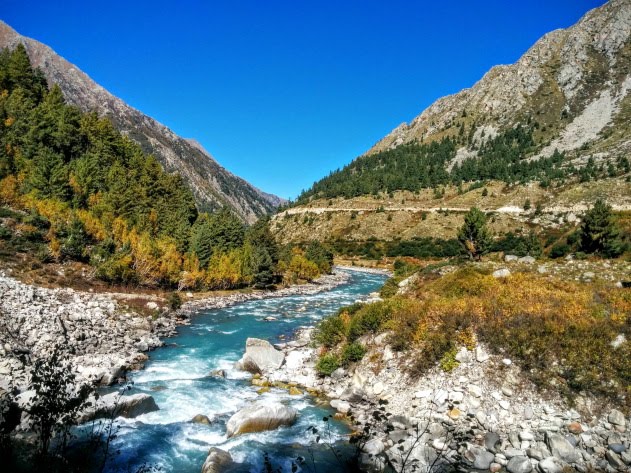
It goes by many titles. Some call it the ‘last inhabited village on the Hindustan-Tibet highway’. Some refer to it as the place with the cleanest air in India. Others call it the ‘gateway to Kailash’. Whatever its title may be, this tiny village in the Kinnaur district of Himachal Pradesh packs a serious punch when it comes to snow capped Himalayan mountain peaks, beautiful meadows, wooden houses, farm land, apple orchards and a pristine blue glacier fed river. I am talking about Chitkul, the first village in the Baspa valley and the last village on the Hindustan-Tibet highway.

Chitkul and the snow capped Himalayas

The last point on the Kinnaur Kailash parikrama circuit, Chitkul is a tiny Himalayan village that is situated at an elevation of 11,320 feet above MSL in the Kinnaur district of Himachal Pradesh. Flanked by mighty snow capped mountains of the Himalayas, this village located in the Baspa river valley is full of potato fields (these potatoes are mighty famous and fetch a pretty price), buckwheat fields, apple orchards and pretty little wooden houses. There is also a 500 year old wooden temple that is located right in the middle of this village and that enjoys a very pretty setting.

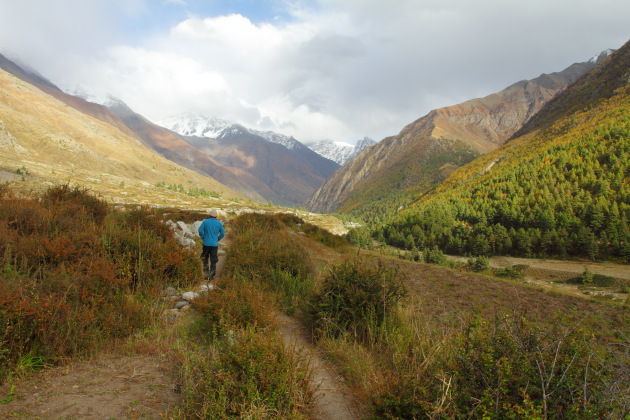
Scenic forest trail from Chitkul to Sangla

Relaxation, pure air and detox are usually on the mind for most visitors and rightly so as this beautiful Himalayan village seems to have everything from a pretty riverside, lush fields and orchards and surreal panoramas. This place is ideal for anyone thinking of a digital detox. Organic food, pristine atmosphere and long walks offer a perfect avenue to rejuvenate yourself. But, there are a bunch of people who visit this village as part of a trekking expedition. Some of them are following a religious trail, but the others are simply on an adventurous trip.

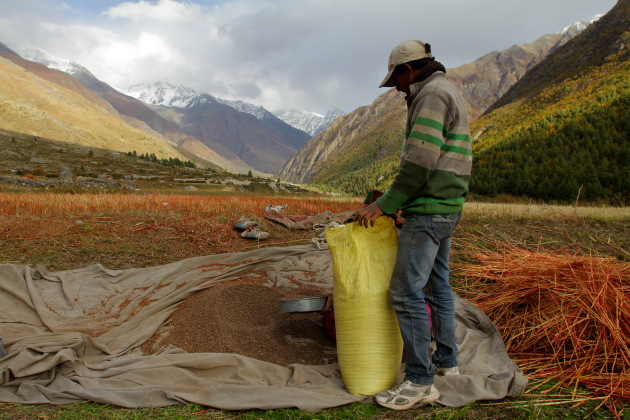
Buckwheat harvest at Chitkul, Himachal Pradesh

The remote and tough Lamkhaga pass that connects the Kinnaur district of Himachal Pradesh with the Gangotri side of Uttarakhand is one of the more popular trekking routes here. This ancient trekking route, located to the south-east of Chitkul was the way the locals carried their temple deity to Gangotri for religious events. The other popular trekking routes around Chitkul are the Chitkul-Charang pass trek that is part of the Kinnaur Kailash parikrama circuit, the Borasu pass trek (an ancient trade route between Har Ki Doon valley of Uttarakhand and the Kinnaur valley of Himachal Pradesh), the Ranikanda meadows trek and the Baspa river trek that connects Chitkul with Raksham, Sangla and Karcham.

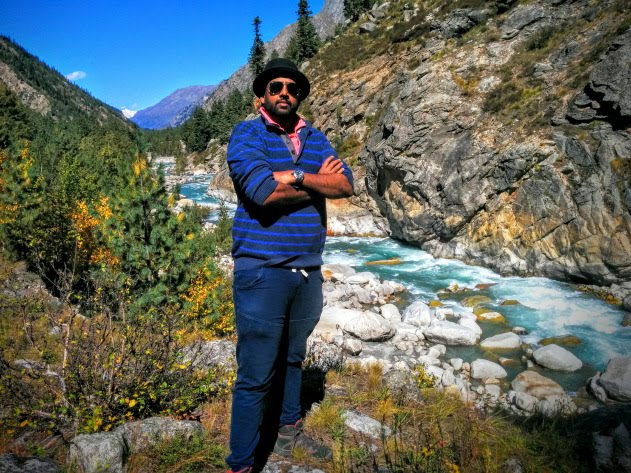
Trekking trail from Chitkul to Sangla by the Baspa river

You can also trek to the Rangrik Rang mountain peak, but since this peak is close to the Indo-China border, this would require special permissions. There are many other different mountain trails around Chitkul that you can also explore, but do remember to stay clear of the east of Chitkul as the Indian army camp, a few kilometers away is the last point that you can enter in this region unless you have special military permissions.

Traditional wooden houses of Chitkul

In late autumn, winter and early spring, Chitkul turns into a white fairy tale village. In August and September, the apple orchards come alive. And in October, the last potato and buckwheat harvest can be seen. In spring, wild flowers adorn the Baspa river valley and in summer, it turns into a mesmerizing hill station. Whatever be your interest and whichever time of the year you happen to visit Chitkul, this Himachali village on the extreme corner of Kinnaur district is bound to blow your mind with its pristine nature and simple, laidback life. The place is so beautiful that I would return here in a heartbeat!

That way is the riverside trekking trail from Chitkul to Sangla

How to reach here:

By road: From Shimla, head straight on the Shimla – Recong Peo highway till you arrive at Karcham, the confluence of the Sutlej and the Baspa rivers just before Recong Peo. At this junction turn right towards Sangla, Rakcham and Chitkul.

By rail: Shimla would be your nearest railway station. You can take the famous Kalka Shimla heritage train to reach here. From Shimla, you will have to go by road to Chitkul.

By air: The nearest airport would be Chandigarh. Kullu airport is also an option, though flight options would be lower. From Chandigarh, you can complete the remainder journey by road or take the train to Shimla and then drive to Chitkul.

Chitkul kids dance to traditional music

Where to stay:

If you don’t mind simple homestays and hotels, you can stay at Chitkul itself. If you want slightly better facilities, head to Sangla, Recong Peo or Kalpa.

Backpacking to Chitkul - a heavenly villages in the high Himalayas of Himachal Pradesh

Best season to visit:

Except the peak of winter, when there is extremely heavy snowfall, Chitkul can be explored the rest of the year. Apple season (August and October), spring (late February to April) and summer (May to July) are perfect to experience this Himalayan village.

Basking in the early morning sun of Chitkul, Himachal Pradesh

Nearby tourist attractions:

1) Rakcham village for its lovely riverside atmosphere

2) Kinner Kailash trek

3) Kalpa village for the Kailash view

4) Sangla village for apples during season and also for lovely views of the Kailash mountain

5) Nako village for its lake and monastery

6) Tabo village for its monastery

7) Baspa river trek, a riverine forest trek flanked by the Himalayas

Continue Reading...

Monday, February 01, 2016

Baspa River Trek from Chitkul to Sangla

Himachal Pradesh is full of gorgeous mountain treks. While, most of them are alpine in nature, there are some hidden ones that are relatively easier and offer a total different experience. Take the Baspa river trek as an example. It is all about climbing rocks, walking through lush valleys and crossing small mountain streams. And all this while, you are not far away from the snow fed Baspa river. The highlight of this river trek is the view of the Kinnaur Kailash peak that stays for almost the entire duration of the trek.

Photo pitstop by the Baspa river while trekking from Chitkul to Sangla

Starting at Chitkul, considered the last village on the Indo-Tibet border, this trek goes all the way to Sangla, one of the famous apple orchards of Himachal Pradesh. One can trek beyond Sangla upto Karcham, but there is too much dam construction downstream and hence the beauty of the river trek is lost beyond Sangla. This river trek from Chitkul to Sangla is about 16 kms long, whereas the distance by road is about 22 kms.

Chitkul and the snow capped Himalayas

If you wish, you can trek by road too, but you will have to bear with the dusty conditions as army trucks and other vehicles keep plying regularly. The walk by road is much easier though. If you trek by the river, you will have to ascend and descend many times as the river meanders through gorges and wide open spaces. Even if you do get tired, which you will at many junctures, you can find a rock by the river and enjoy the spectacular views.

Trekking from Chitkul to Sangla along the Baspa river is so much fun

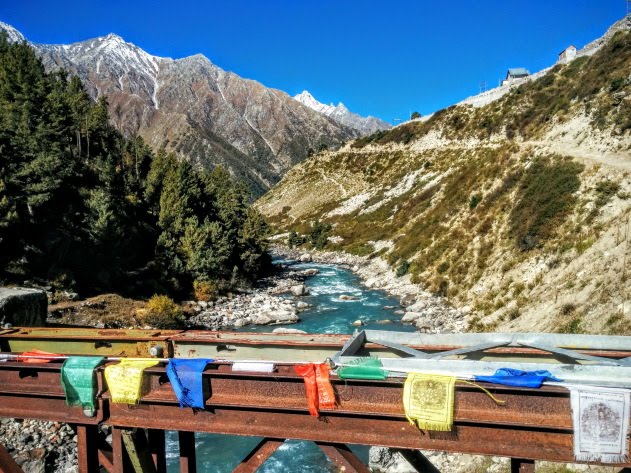
Once you start at Chitkul village, take the bridge below the village and cross on to the other bank of the river. From here, take a goat trail (I call it so as it has goat droppings all the way) and make your way through a dense pine forest. Once you cross this forest, you will start walking by the river, but at a slight altitude. Then, comes the most entertaining part of this river trek, the makeshift wooden log bridges.

Chitkul - the last village on the Hindustan-Tibet highway

Now, imagine this, you are surrounded by the mighty Himalayas on all sides and just below you (by about 50 feet) is the Baspa river. As you are standing in a valley, it is safe to assume that there would be many small streams and tributaries that will join the main Baspa river. You are walking on the left bank of the river and headed West-North West and you have to cross these many mountain streams. You cannot get yourself wet as the waters are extremely cold and sometimes turbulent. The only option left for you is jumping over rocks or crossing narrow wooden log bridges. Set at a decent height above the river, these bridges test your sense of balance and more so if you are carrying your backpack.

Scenic Forest Trail from Chitkul to Sangla

Once you cross the first main log bridge, you come to a rocky zone and then a small village and then begins a steep hike through the forests again. Then, you cross 2 more log bridges and then you drop down to the river and cross the narrow gorge. Then, in a short while, you will reach an iron bridge on the river. Cross onto the right bank and continue towards Rakcham. You can either camp overnight at Rakcham and enjoy the rural atmosphere here or continue downstream to Batseri. This stretch between Rakcham and Batseri has more villages and hence more agricultural land. If you are in season, you will see this entire land covered in shining red buck wheat.

Buckwheat harvest at Chitkul, Himachal Pradesh

At Batseri, camp overnight and explore the famous Devta temple here.  The next morning, you can continue the trek to Sangla through apple orchards. As you approach Sangla, the river widens, there are larger meadows, more apple orchards, more farming and more cattle. Hence, this part of the trek will mean more interactions with the locals and more getting to see the local cultures. While, the previous stretch between Rakcham and Chitkul being more raw nature and forests.

Crossing the beautiful Baspa river at Chitkul

This trek is fairly easy, but it is not accessible all through the year. In fact, it is only accessible during the time from September through February when there is no rain and the river and its tributaries shrink. Unlike other Himalayan treks, this river trek will become impossible when the snow melts and all small tributaries become swollen with water. In order to prepare for this trek, carry a headlamp or flashlight, some high energy bars, 2 liters of water per person unless you are fine to drink the river water, a pair of sunglasses and a good pair of boots (don’t bother with running or tennis shoes as the combinations of rock and water will wear them out pretty quickly). A warm layer will help as the early mornings and late evenings get nippy. There is no phone coverage for most of the duration of this trek and hence download your maps so that you can access it in offline mode.

Trekking Trail from Chitkul to Sangla

If you are carrying your tent, don’t keep your surroundings clean without any food scraps as this is bear country. If you intend to stay in a hotel room, Batseri, Rakcham and Sangla have lots of hotels, camps and guest houses to choose from.

Continue Reading...
Logo Credits : Jobi T Chacko. UI/UX Credits : Murugan S Thirumalai
Copyright © 2009-2026 Sankara Subramanian C (www.beontheroad.com)
Reproduction without explicit permission is prohibited. All Rights Reserved

Join the Travel Club for FREE!!
and every fortnight get in your inbox...interesting experiential and off-beat travel stories , destination guides, handy tips (travel, photography and visa) based on personal experience, global vegetarian delights with helpful survival guides and gorgeous world travel images and videos as I (the Indian traveler) trot the globe! And a lot of other travel invites and soon to be launched goodies !

* indicates required
Close