Himalayan Treks - Be On The Road | Live your Travel Dream!
none

Wednesday, November 26, 2025

Emuli Grasslands: Gateway to the Hidden Seven Lakes Trek of Arunachal Pradesh

Stunning Emoli Grasslands near Anini, Arunachal Pradesh

This serene and beautiful destination is ideal for nature lovers and trekkers. It offers an unforgettable adventure in one of India’s most scenic and remote regions. It is an unspoiled highland meadow with lush, green grasslands, colourful wild flowers and stunning mountain backdrops of the Eastern Himalayas. It is the starting point for an exciting high altitude journey through the Mishmi hills to seven glacial lakes. I am talking about Emuli Grasslands that is located in the Dibang valley of Arunachal Pradesh.


The journey to Emuli grasslands begins at Emuli village where you can park your car and start trekking uphill. As you start climbing, you will notice the Mathun river to your right and it pretty much keeps you company from down below as you crisscross your way to the top. Every now and then, flat stretches appear that allow you to catch your breath and admire the vistas surrounding you. Unlike most of the hills in this region, this route is full of grasslands owing to the high speed of winds that blow here through the year. These high winds only allow short to tall grasses to grow here, unlike other parts where thick evergreen and coniferous forests grow. As you reach the top, these grasslands give way to the forests that are typical of Arunachal Pradesh. It is the Emuli top that is the starting point for the trek to the seven glacial lakes that include Dini, Chene and Huhu.

The trek can be classified as easy to moderate, but it can get tough during the rainy season when the trail gets slippery on the sharper inclines. It is best to go with a local guide who will take you on the correct trail. And do remember to carry some water and snacks with you as you will certainly need some food supplies during the trek. A good pair of walking boots, sunglasses and a warm layer is recommended.

Climbing to the top of Emoli Grasslands near Anini in Arunachal Pradesh

Emuli grasslands is more than just a gateway to the seven glacial lakes. It offers an escape to an untouched world that is home to rich biodiversity with snow capped mountain views, tranquil atmosphere and dancing wildflowers and grass. Whether you are a trekker, a nature lover or simply a traveller, you will definitely fall in love with this soul-stirring paradise in a remote corner of Arunachal Pradesh.


Best season to visit:

Emuli grasslands is at its prettiest best during the wet months from June through November. During this time, the trail can be a bit slushy and slippery. I went during March and during this time, the trail was nice and hard, but the views were of dry grass and most of them had been flattened by the wind.

The trekking trail at Emoli Grasslands, Arunachal Pradesh

How to reach there:

The nearest airport would be Tezu, about 300 kms away, but the nearest airport with the best connectivity would be Dibrugarh, about 390 kms away. The nearest large railway station would be Dibrugarh, about 390 kms away.

If you are traveling by bus, you will have to travel first to Roing and then to Anini before finally making your way towards Emuli.

If you are traveling by road in your own vehicle, you will take the scenic route from Roing to Anini via Mayodia pass and then turn left towards Emuli. Once you cross Emuli village, do keep an eye out for a signboard that shows you the trekking path. At the trekking path, park your vehicle, carry your gear and starting hiking to the top. The trek to the top of Emuli grasslands should take you anywhere between two and four hours depending on your fitness. Beyond that lies the starting point for the seven lakes trek.

Relaxing at Emoli Grasslands, Arunachal Pradesh

Where to stay:

The nearest place to stay would be Anini, about 24 kms away (or 40 minutes away). At Anini, you can find homestays, guest houses and resorts that cater to a wide variety of budgets.

If you are planning on camping at Emuli, you should either plan to carry your camping equipment (tent, sleeping bags, etc.) or ensure that your trekking group has some accommodation plan for you.

Posing at Emoli Grasslands, Arunachal Pradesh

Where to eat:

The nearest and the best place to eat would be Anini were you can find both snacks and proper meals. If you are planning on doing the long trek, it is best to carry your food supplies with you or ensure that your trekking group takes care of it for you.

Another view of the Emoli Grasslands Trekking path

Other nearby tourist attractions:

1) Traditional wooden hanging bridges of Arunachal Pradesh

2) Mayodia Pass: Arunachal Pradesh’s high altitude gem

3) Anini: Gorgeous hill station of India

4) Dibang Wildlife Sanctuary: Land of waterfalls and mini Switzerland in India

5) Ranaghat Bridge near Pasighat: Mesmerizing view of the Brahmaputra river

6) The World of Rhododendrons between Mechuka and Lamang

7) India’s Last Cafe: Gorgeous pit stop enroute Lamang, Arunachal Pradesh

8) Lamang: Unknown snow covered paradise of India

9) Arunachal Pradesh’s Kaho: The First Village of India

Continue Reading...

Wednesday, June 11, 2025

Nepal for the Unconventional Traveler: Everest Base Camp and Manaslu Circuit Off the Mainstream Trail

Everest Base Camp (EBC) Trek, Nepal

Trekking in Nepal is often reduced to two words: Everest Base Camp. Yet for those drawn to authenticity, the Himalayas offer much more than a popular trail.

In this article, I’ll explore two routes that reveal the soul of Nepal: the iconic Everest Base Camp Trek and the lesser-known Manaslu Circuit Trek. Both challenge your body, but more importantly, they shift your perspective.

These aren’t tourist experiences. They are journeys—quiet, humbling, and, at times, beautifully uncomfortable.

What It Means to Travel Differently


Not every traveler wants luxury lodges and glossy itineraries. Some seek something else—a place to walk without performance, where encounters happen naturally and landscapes speak louder than itineraries.

Both Everest and Manaslu offer this, depending on how you approach them. The key is to slow down, stay curious, and respect the rhythm of the land.

Everest Base Camp Trek - Real Trails, Raw Views, Unfiltered Nepal

The Everest Base Camp Trek often draws crowds, and it’s easy to dismiss it as overdone. That would be a mistake. Done with care, this trek remains one of the most rewarding experiences in the Himalayas.

Starting from Lukla, you pass through Namche Bazaar, climb steadily to Tengboche Monastery, and eventually stand beneath the towering Khumbu Icefall. But it’s not about Everest itself. It’s about mornings with clear skies, soft-spoken guides who know the trail by heart, and the quiet pride of making it on foot.

Manaslu Circuit Trek: The Quiet Trail

Larke Pass during Manaslu Trek, Nepal

If Everest feels like a chorus, Manaslu is a solo instrument—simple, haunting, and powerful. The Manaslu Circuit Trek remains one of Nepal’s least disturbed routes. It winds through dense forests, stone villages, and across the dramatic Larkya La Pass (5,160m).

You won’t find souvenir stalls or café bakeries here. Instead, you’ll walk alongside yaks, greet monks at hillside gompas, and feel the quiet presence of the mountains. It’s a different kind of reward—less celebratory, more meditative.

Culture in Layers: Sherpa and Tibetan Worlds


Both treks move through culturally rich areas, each distinct. On the Everest route, you’ll encounter Sherpa Buddhist culture—mani walls, spinning prayer wheels, and the deep-rooted reverence for the mountains.

In Manaslu, the air shifts. The villages carry a Tibetan influence, with stone houses, remote monasteries, and elders who speak a dialect passed down from across the border. This contrast isn’t just interesting—it’s immersive.

You’re not walking through scenery. You’re walking through worldviews.

Crowds and Quiet: Which Feeds You?


Everest offers connection. You’ll meet trekkers from around the globe, share tea in communal lodges, and hear a dozen languages at dinner.

Manaslu offers silence. Sometimes the only sound is the wind in the trees or the distant jingle of mule bells. There’s value in both.

If you crave solitude and reflection, Manaslu delivers. If you’re energized by people and shared effort, Everest won’t disappoint.

The Landscape’s Story


Everest
is immediate. From day one, the peaks rise like stone cathedrals. The higher you go, the more the terrain hardens—glaciers, ridgelines, ice.

Manaslu
unfolds slowly. It begins in lush lowlands and moves through alpine forests before revealing wide open valleys and barren, windswept passes.

If Everest is a visual climax, Manaslu is a slow build—one you feel in your body and memory.

Altitude and Acclimatization


Both treks reach altitudes over 5,000 meters. EBC tops out at 5,364m at base camp. Manaslu’s high point, Larkya La, sits slightly lower at 5,160m.

Manaslu ascends more gradually, which can help with acclimatization. Everest begins at a higher altitude in Lukla, so your first few days are critical. Both require patience. This isn’t a race—it’s a process of adaptation and awareness.

Permit Requirements: Know Before You Go


Everest Base Camp Trek
:

Sagarmatha National Park Permit

Khumbu Rural Municipality Entry Fee

Manaslu Circuit Trek
:

Manaslu Restricted Area Permit (MRAP)

Annapurna Conservation Area Permit (ACAP)

TIMS card

Note:
A Licensed guide and a minimum of two trekkers are required if you plan to trek in the Manaslu region.

Manaslu’s additional permits and guide requirements may seem like a hassle. They protect the trail’s integrity and ensure local involvement.

Best Seasons for Both Treks


Spring (March–May) and autumn (September–November) are ideal. You’ll find clear skies, moderate temperatures, and stable trail conditions.

Avoid monsoon (June–August)—landslides and poor visibility are common.

In winter (December–February), Manaslu’s pass may be closed due to snow, and high-altitude nights are bitterly cold on both routes.

Shoulder months—late November or early March—offer quiet trails with manageable weather, especially for EBC.

Accommodations: What to Expect


Everest
has range. From basic teahouses to upgraded lodges with hot showers and Wi-Fi (in some villages), it’s evolved to handle global trekkers.

Manaslu
is simpler. Teahouses are locally built, family-run, and often without modern amenities. Still, the welcome is sincere, and the food—dal bhat, momos, potatoes—is hearty.

What you lose in comfort, you gain in connection.

Trek Costs: Everest vs. Manaslu


Everest Base Camp (12–14 days)
:

· Group tour: $1,300–$1,800

· Independent (w/o guide): ~$900+

Manaslu Circuit (14–17 days)
:

Guided only: $1,300–$2,000 (permits, meals, transport, support)

EBC gives flexibility for solo trekkers. Manaslu’s higher cost includes necessary logistics—transport to trailhead, restricted permits, and professional guidance.

Safety and Support on the Trail


Everest
has more infrastructure: health posts, helicopter rescue options, and a larger network of guides and porters.

Manaslu
is remote. You’ll rarely see helicopters. Guides are essential—not just for safety, but for cultural access.

In both cases, travel insurance with high-altitude coverage is non-negotiable.

Environmental and Social Responsibility


Trekking should leave more behind than footprints. Choose local agencies that:

· Hire local staff at fair wages
· Minimize waste
· Educate trekkers on trail etiquette and culture
· Avoid plastic

Stay on trails. Respect customs—whether it’s removing your shoes in a monastery or listening more than speaking.

Which Trek Is Right for Traveller?

Feature Everest Base Camp Manaslu Circuit
Popularity High Low
Cultural Highlight Sherpa Buddhism Tibetan Influence
Infrastructure Developed Basic
Permit Process Simple Restricted, guide required
Trail Type Structured, busy Varied, remote
Ideal For First-time trekkers, bucket list Repeat trekkers, cultural depth

The best choice depends not on the trail, but on the type of experience you want to have.

Practical Trekking Advice
  • Train before your trek—especially cardio and hill walking
  • Test your boots beforehand to prevent blisters
  • Travel with a local operator for permits, logistics, and safety
  • Acclimatize properly: rest days are not optional
  • Bring layers: expect warm days and freezing nights

Also, pack light. The less you carry, the more freely you’ll walk.

So, who’s the winner?


It depends on what you're looking for. But if we judge by authenticity, cultural depth, and trail solitude, the Manaslu Circuit Trek edges ahead for travelers who value raw, immersive experiences.

On the other hand, if you're seeking dramatic landscapes, world-renowned routes, and a sense of achievement that resonates across continents, the Everest Base Camp Trek holds its ground as a timeless classic.

For first-time trekkers, Everest offers stronger infrastructure and broader accessibility.

For those returning to Nepal—or looking to escape the obvious—Manaslu may just be the trek they never knew they needed.

Whichever you choose, both routes represent what trekking in Nepal is truly about: connecting deeply with the land, its people, and a rhythm far removed from the ordinary.

Continue Reading...

Friday, May 29, 2020

5 Best Treks For Beginners In Uttarakhand

Best Treks for Beginners in Uttarakhand

In all probability, you might have heard of the iconic band 'The Beatles' and even heard their music. But you might be surprised to know they visited Uttarakhand, dubbed as the 'Land of God', to find some creative inspiration!

Well, it is not tough to gauge why they conceived Uttarakhand as a source to get their creative juices flowing. The sprawling Himalayas, dense wood, whirlwind of flora and fauna, and lastly, the treks, everything for you to delve into your creative perfection away from the noise.

Hill stations like Nainital, Mussoorie, Auli and Dehradun have always been pulling in people across the globe. The trekking enthusiasts have more reasons to visit Uttarakhand as the trails of some of the famous treks lead to this place.

We will be talking about some of them today.

1) Nag Tibba - Appreciate Nature’s Mastery

Sunset from Nag Tibba trek

Best time to visit:
Winters - October to December / Summer - April to June

Duration of Trek: 7 hours for a 10 km trek from the base camp to the hilltop

Level of difficulty: Relatively easy

Each trek takes hours of effort to get a sight of nature's brilliance forming indelible moments. Nag Tibba provides sight of nature’s mastery, but with minimum sweat work. It is an ideal weekend trek that can aptly compensate for the Himalayan trek you have been planning for months.

The trail cuts its way through the grass cover, dense jungle and heritage sites. Thus, all the way, you have something pushing you forward when you are exhausted. At the top, you have the prize waiting, a 100-degree view of the snow-capped Himalayan range, Bandarpoonch and Kala Nag peak. The sight of
Kedarnath peak in the North would itself be the sole motivator of the trek.

2) Har Ki Doon - Encounter Rare Fauna and Floor

Har Ki Doon Trek, Uttarakhand

Best time to visit:
Summer - April to June / Autumn - September to December.

Duration of Trek: Total 47 km can be covered in 6-7 days.

Level of difficulty: Moderately difficult

This trek is a part of a common folklore tale and stretches over 44 km. The highest point in the trek stands at 14,000 ft. The mesmerising views of the nearby mountain ranges in both summers and winters are a sight to behold.

The beauty of Har Ki Dun trek lies not just at the summit, the trail itself takes you through a journey in time with small settlements formed a hundred or even some thousand years ago. Amidst the woods, you might find some rare avian life along with other forms of wildlife.

This place is known for its frequent rains and most of it is concentrated in summers. The hide and seek between the sun and rain-filled clouds ready to burst make the trek even more satisfactory. But you must be properly equipped to tackle such situations.

3) Valley of Flowers – Trek amidst Nature’s Vibrant Colors

Scenic treks of Uttarakhand

Best time to visit:
July to August, the time when the flowers are in full bloom

Duration of Trek: About 6 days to complete the trek

Level of difficulty: Easy to Moderate

Close your eyes and imagine yourself standing amid more than 600 floral species, surrounded by tall mountains. Welcome, you are in a Valley of Flowers, as listed in UNESCO world heritage sites.

This place is a paradise for people who are enthralled by nature and love flowers. Not just the floral life form that is enticing here, a few kilometers into the wood and you might spot a musk deer, black bears of Asian origin, blue sheep and many other wildlife species.

As a tourer, you will find many reasons that prove why this place is listed in the UNESCO records.

4) Auli – Winter Trekking Destination

Those snow capped mountain views during a trek in Uttarakhand

Best time to visit:
November to March

Duration of Trek: 3 hours, covering 5-6 km

Level of difficulty: Moderately difficult

Auli is one of the most perfect winter destinations, away from rising mercury of the urban chaos. Trekking in Auli has the ideal mix of leisure and adventure. Such combination results from the lush green valley and snow-covered mountains that follow you throughout the trail.

Auli is one of the ideal places for a snow trekking adventure. It cultivates a sense of joy when you see snow all around you, much like a kid in a candy store. The sight of sunrise and sunset can turn anyone into a photographer.

As you complete the trek, a 360-degree view of Garhwal Himalayas and Nand Devi awaits you.

5) Kedarkantha Trek - Amidst Snow Covered Trails

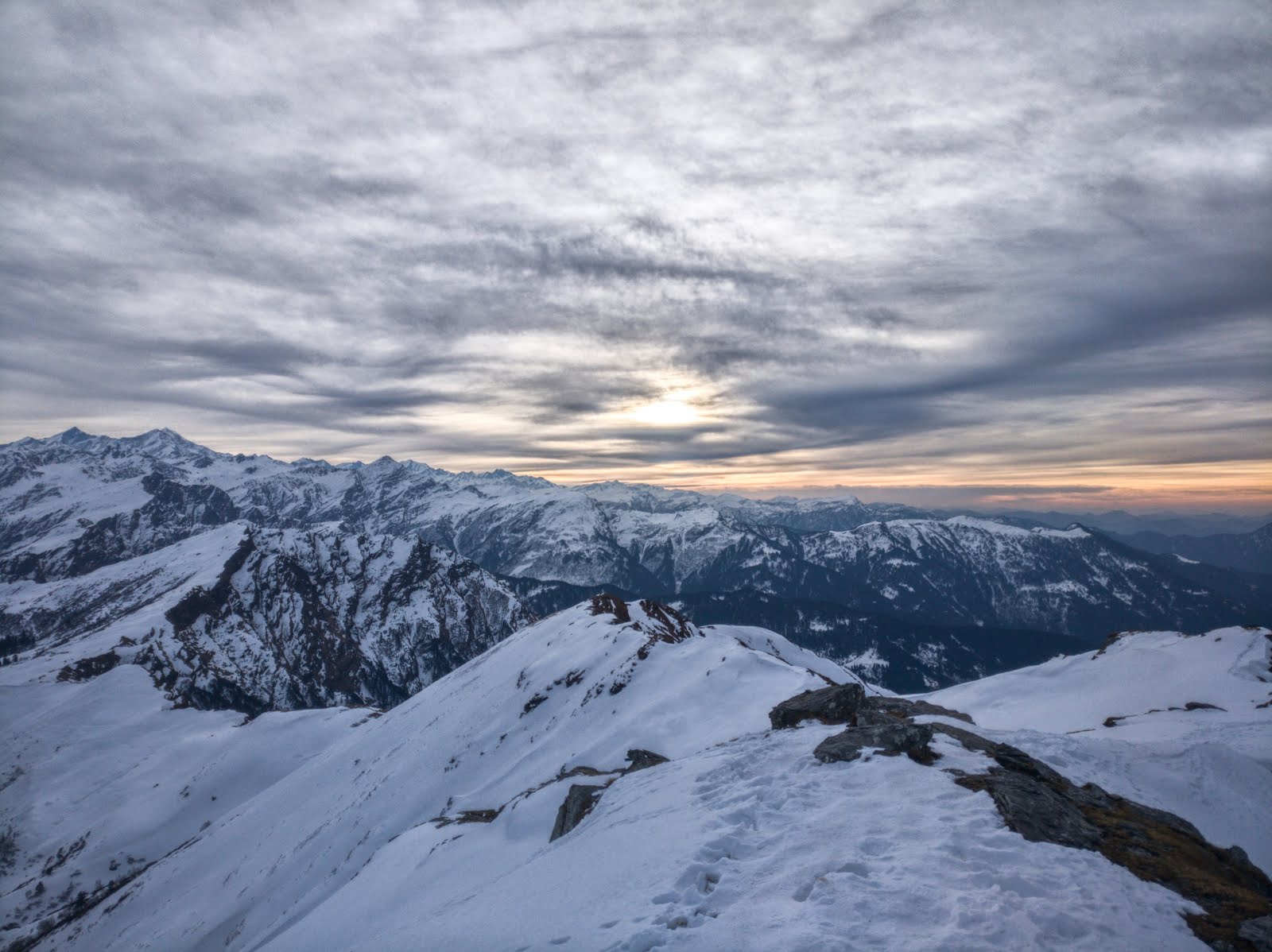
Skyscape from Kedarkantha Trek, Uttarakhand

Best time to visit:
Winter - December-to-March.

Duration of Trek: 7 hours to complete the trek of 6 km

Level of difficulty: Easy-to-moderate

You might not be an expert trekker to take on hard terrain all the time, but if you want to be a part of such a pre trekking destination, the Kedarnatha trek is your place. The snow-covered trail shows you the path right to the summit. The surrounding view of the snow-covered Black peak, Bandarpoonch and Swargarohini mountain range will allure you to move forward.

The campsites are sporadic and consistent. Thus at any point in your journey, there is a campsite just a few kilometers away. These campsites would provide you the much-needed rest after long hours of trek and get your body ready for the upcoming trails.

Closing thoughts

Beginning the descent after soaking in the snow capped mountain views

In a nutshell, Uttarakhand has the trails to suit all forms of trekking enthusiasts. You just need to unpack apprehensions and dive into the adventure. You have parks, snow covered mountain ranges and rich flora and fauna reserves to keep you at your toes.

AUTHOR BIO: Amit is an avid traveler and passionate writer. His weekends are dedicated to travel and free time dedicated to writing for his blog www.realbharat.org. His passion for both these hobbies made him start realbharat.org. The blog is intended to bring out the real India and present it to the world!

All the photographs in this article are courtesy of the author.

Continue Reading...

Wednesday, July 25, 2018

12 Stimulating Sights of Rupin Pass Trek

Rupin River, the main path of the Rupin Pass Trek

The week long Rupin Pass Trek in Himachal Pradesh offers changing scenery almost on a half day basis. It boasts of being among the top 10 Indian Treks. Full of adventure and surprises, this hike keeps you anticipating what follows next.

This is a moderately difficult trek. The route is patched with scree, snow, swampy ground, moraines, sharp ascent, and descent. To enjoy the amazing sights, you need to be an experienced trekker with good cardiac stamina. Else, the terrain can take a physical and mental toll on you.

Colorful flowers seen during Rupin Pass Trek

The journey begins from Dhaula Village (5,100 ft.) in Uttarakhand and ends at Sangla Kanda Village (8,900 ft.) in Himachal Pradesh. Here are some spectaculars you will find in your journey in the order of beginning to end:

River Rupin:
Gushing over the bed of rocks and boulders, this beautiful river stays with you near or far until the Upper Waterfall Camp on day six. As you trek towards Sewa Village on day two, just around half an hour out of Dhaula, you see a full stretch of River Rupin flowing below in the green valley. Looking down from that height it makes for a picture perfect scenery. The river culminates in the legendary, high-altitude 3-fold Rupin waterfall.

Sewa Temple:
Sewa owes its identity to an ancient Lord Shiva Temple, which is opened just once in 12 years. This wooden temple’s architecture has typical Kinnaur influence. The double storied building is like a clock tower or light house in shape with slanting mountain style thatched slope top. It stands tall amidst wheat fields and apple orchards. You fix your first camp at this very fascinating Sewa village (6,300 ft.).

The 2 States:
On day three en route to Jhaka, you cross an old log bridge over a fast flowing Rupin stream. And you won’t believe that in traversing that bridge, you crossed from Uttarakhand to Himachal Pradesh. Yes! This dilapidated wooden bridge connects the two states!

Hanging Village seen during Rupin Pass Trek

Hanging Village:
The same day you climb to the Hanging Village of Jhaka (8,700 ft.). A difficult day, but totally worth it. Towards the end of the hike you pass through thick forest of deodar and walnut. As you hike further you will see village huts dotted over the slope’s edge in an incline. The whole hamlet looks suspended on the hill side and so the name. Even the guest houses and home stays have balconies resting at the border of the cliffs!

Forests:
Days 2-4 of the trek involve cruising through beautiful thick forests of Pine, Deodar, Fir, and Walnut with over 100 foot-tall trees. Some woods even host you with several streams and waterfalls.

Burans Kandi Meadows - Rupin Pass Trek

Buras Kandi and Saruwas Thatch (11,150 ft.) Meadows:
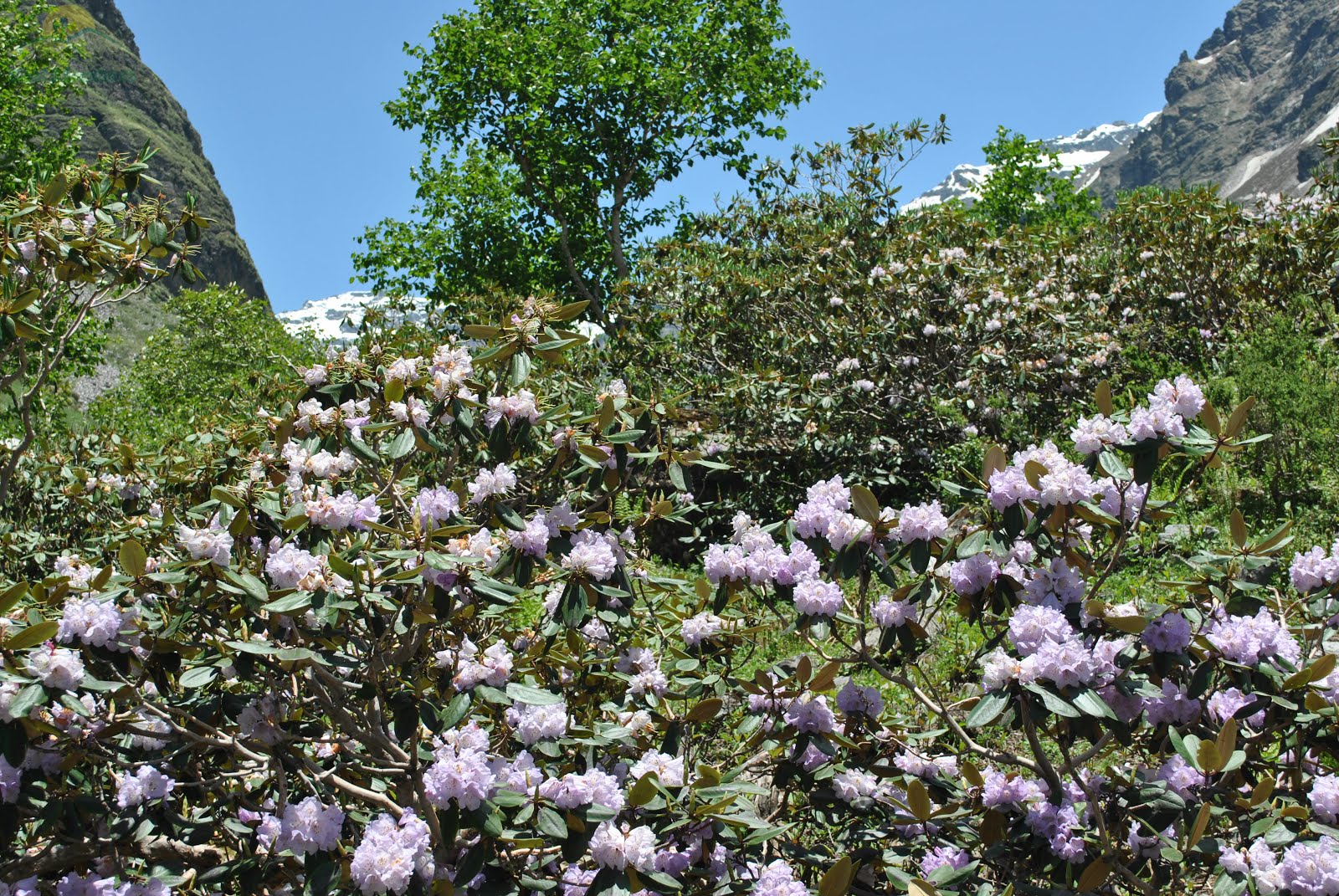
On day four, as you set out for Saruwas Thatch, past Buras Kandi, you reach an incredible meadow with multi-colored rhododendrons adding vibrancy against the green mountains. River Rupin flows nearby. As you reach the Saruwas Thatch Camp you are standing again among velvety green, majestic mountains on lush grassland with yellow wild flowers contrasting it.

Waterfall seen during Rupin Pass Trek

Rupin Waterfall:
Rupin Waterfall is spotted in May-June and in September-October. That’s also the time to trek in the region. The waterfall thunderously flows from a height of over 1,500 ft. in three levels according to visibility – upper, middle, and lower. You get the first glimpse of lower waterfall on day five as you trek for Dhanderas Thatch Camp (11, 680 ft.). On day six, you climb to Upper Waterfall Camp (13,120 ft.) and you see a massive Rupin River falling down in full force as a raging waterfall from the middle of the lush green grassy mountain slopes. The view is just spectacular!

Glacial Valley Meadow:
See the beautiful glacial valley meadows on day four when hiking for Saruwas Thatch.

Snowfield seen during Rupin Pass Trek

Snow:
This trek gives you snow in full measure. On day five, you negotiate over natural snow bridges when heading for lower waterfall at Dhanderas Thatch Camp! Stretched through the valley, the frozen rivers help you cross the flowing river underneath. You also see a lot of snow slopes here. And the sense of adventure that brought you here in the first place pulls you in to glide down them. Cross three waterfalls to reach very splendid and amazing snow fields on day six at the Upper Waterfall Camp. They are vast stretches of snow with several river streams passively running across the white basin. Black mountains around add to the contrast.

Rupin Pass Trek, Himachal Pradesh

Rupin Pass (15,380 ft.):
You traverse through Rupin Pass Gully to reach Rupin Pass. The climb and deep snow make the stretch arduous as well as interesting. You get to spend just 15-20 minutes at the saddle shaped Pass, from where you see massive mountains all around, including Dhauladhar and Kinnaur Kailash Ranges. You come sliding down from the Pass to descend, which is pure unadulterated fun.

Kinnaur Kailash Range:
On the last day of the trek (day eight), you lose height quickly due to steep descent. On your way down, you see Kinnaur Kailash Range standing tall in front of you. The trek ends as you reach Sangla Kanda.

Note: All the photographs in this article are copyright of Bikat Adventures and used here with their explicit permission.

Continue Reading...

Monday, February 01, 2016

Baspa River Trek from Chitkul to Sangla

Himachal Pradesh is full of gorgeous mountain treks. While, most of them are alpine in nature, there are some hidden ones that are relatively easier and offer a total different experience. Take the Baspa river trek as an example. It is all about climbing rocks, walking through lush valleys and crossing small mountain streams. And all this while, you are not far away from the snow fed Baspa river. The highlight of this river trek is the view of the Kinnaur Kailash peak that stays for almost the entire duration of the trek.

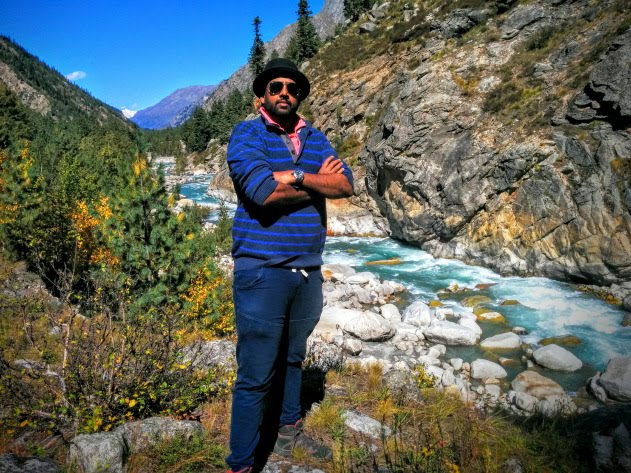
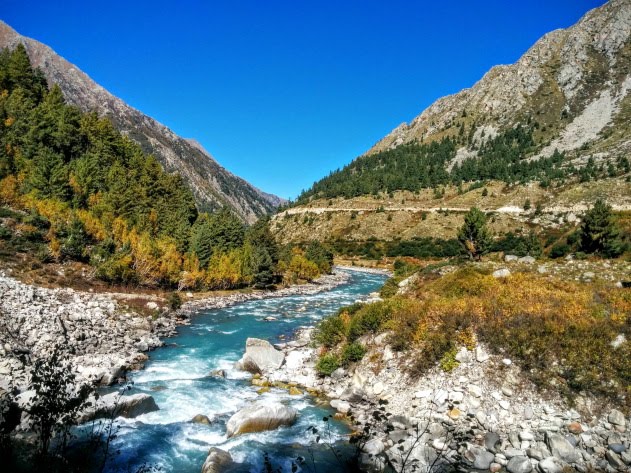
Photo pitstop by the Baspa river while trekking from Chitkul to Sangla

Starting at Chitkul, considered the last village on the Indo-Tibet border, this trek goes all the way to Sangla, one of the famous apple orchards of Himachal Pradesh. One can trek beyond Sangla upto Karcham, but there is too much dam construction downstream and hence the beauty of the river trek is lost beyond Sangla. This river trek from Chitkul to Sangla is about 16 kms long, whereas the distance by road is about 22 kms.

Chitkul and the snow capped Himalayas

If you wish, you can trek by road too, but you will have to bear with the dusty conditions as army trucks and other vehicles keep plying regularly. The walk by road is much easier though. If you trek by the river, you will have to ascend and descend many times as the river meanders through gorges and wide open spaces. Even if you do get tired, which you will at many junctures, you can find a rock by the river and enjoy the spectacular views.

Trekking from Chitkul to Sangla along the Baspa river is so much fun

Once you start at Chitkul village, take the bridge below the village and cross on to the other bank of the river. From here, take a goat trail (I call it so as it has goat droppings all the way) and make your way through a dense pine forest. Once you cross this forest, you will start walking by the river, but at a slight altitude. Then, comes the most entertaining part of this river trek, the makeshift wooden log bridges.

Chitkul - the last village on the Hindustan-Tibet highway

Now, imagine this, you are surrounded by the mighty Himalayas on all sides and just below you (by about 50 feet) is the Baspa river. As you are standing in a valley, it is safe to assume that there would be many small streams and tributaries that will join the main Baspa river. You are walking on the left bank of the river and headed West-North West and you have to cross these many mountain streams. You cannot get yourself wet as the waters are extremely cold and sometimes turbulent. The only option left for you is jumping over rocks or crossing narrow wooden log bridges. Set at a decent height above the river, these bridges test your sense of balance and more so if you are carrying your backpack.

Scenic Forest Trail from Chitkul to Sangla

Once you cross the first main log bridge, you come to a rocky zone and then a small village and then begins a steep hike through the forests again. Then, you cross 2 more log bridges and then you drop down to the river and cross the narrow gorge. Then, in a short while, you will reach an iron bridge on the river. Cross onto the right bank and continue towards Rakcham. You can either camp overnight at Rakcham and enjoy the rural atmosphere here or continue downstream to Batseri. This stretch between Rakcham and Batseri has more villages and hence more agricultural land. If you are in season, you will see this entire land covered in shining red buck wheat.

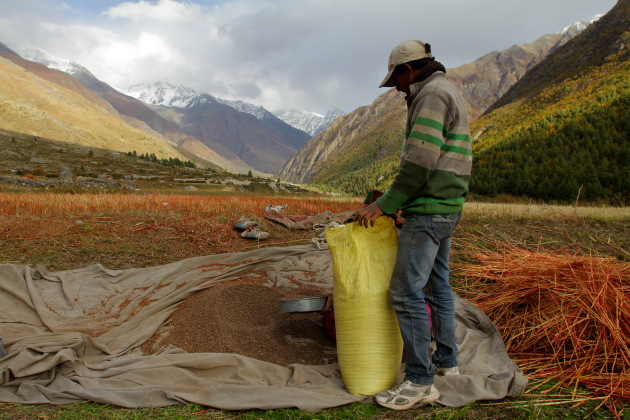
Buckwheat harvest at Chitkul, Himachal Pradesh

At Batseri, camp overnight and explore the famous Devta temple here.  The next morning, you can continue the trek to Sangla through apple orchards. As you approach Sangla, the river widens, there are larger meadows, more apple orchards, more farming and more cattle. Hence, this part of the trek will mean more interactions with the locals and more getting to see the local cultures. While, the previous stretch between Rakcham and Chitkul being more raw nature and forests.

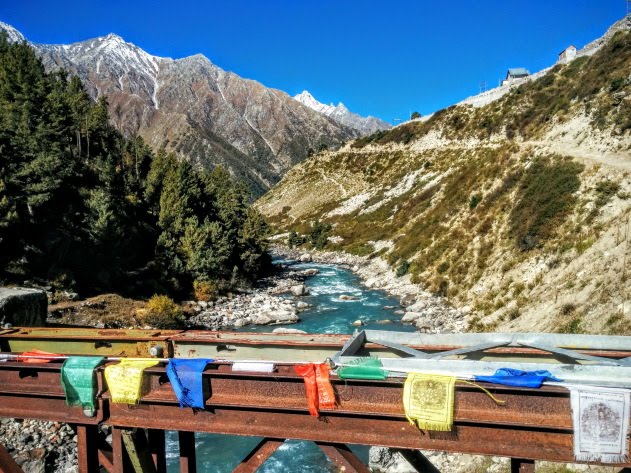
Crossing the beautiful Baspa river at Chitkul

This trek is fairly easy, but it is not accessible all through the year. In fact, it is only accessible during the time from September through February when there is no rain and the river and its tributaries shrink. Unlike other Himalayan treks, this river trek will become impossible when the snow melts and all small tributaries become swollen with water. In order to prepare for this trek, carry a headlamp or flashlight, some high energy bars, 2 liters of water per person unless you are fine to drink the river water, a pair of sunglasses and a good pair of boots (don’t bother with running or tennis shoes as the combinations of rock and water will wear them out pretty quickly). A warm layer will help as the early mornings and late evenings get nippy. There is no phone coverage for most of the duration of this trek and hence download your maps so that you can access it in offline mode.

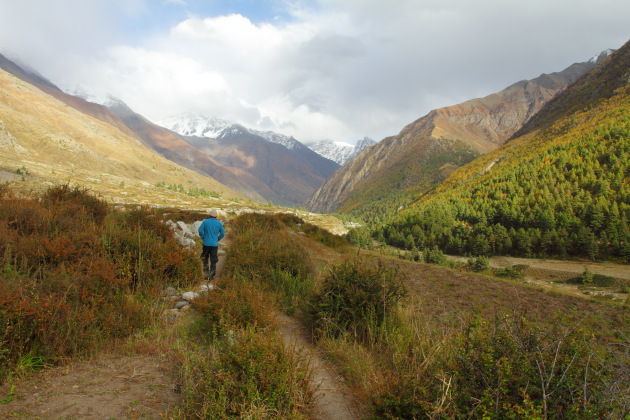
Trekking Trail from Chitkul to Sangla

If you are carrying your tent, don’t keep your surroundings clean without any food scraps as this is bear country. If you intend to stay in a hotel room, Batseri, Rakcham and Sangla have lots of hotels, camps and guest houses to choose from.

Continue Reading...

Wednesday, January 27, 2016

Top 6 Winter Treks in the Indian Himalayas

As a thumb rule, most people prefer to explore the spectacular Himalayas in the summer months, but if you are willing to brave the elements, the winter treks in the Himalayas offer the best views. And those are the kind of views that we see in magazines or the television and ones that we often gape in wonder. Here are 6 of my top winter treks in the Himalayas that will make you experience a slice of heaven, if not heaven as a whole.

1) Chadar Trek, Ladakh

Frozen Zanskar River

Chadar, which literally means a carpet, is an ancient winter walking trail over the Zanskar river. Historically, the Zanskari people used to walk many days from the Zanskar valley to Leh to buy food supplies and for trade. This walk would be over the frozen Zanskar river, which is literally like a white carpet.

This is one adrenaline packed trek in icy conditions. You walk on the frozen river, take selfies next to frozen waterfalls, camp overnight in caves, see interesting Himalayan wildlife like the ibex, bharal and may be even the elusive snow leopard, listen to stories of the ancient Zanskaris who walked this trail and simply enjoy the feeling of living and breathing in a white world.

As this is going to be one really cold trek, it is best to pack the right gear.

2) Singalila Trek, West Bengal and Sikkim

Snow covered valley seen on the Singalila Trek

One of my favorite Eastern Himalaya treks, the Singalila ridge separates India from Nepal. This trek which begins in Manenbhanjang near Darjeeling goes all the way up to Sikkim, but most trekkers go up to Sandakphu and Phulat to catch a glimpse of the first rays of the sun on some of the highest peaks of the world, especially Mount Kanchendzonga and Mount Everest. These sensational sunrise views that I mention here is best seen in the winter months of December and January when the air is clear and the morning mist stays away. This trek will also take you close to some rare flora such as the rhododendrons, orchirds and primulas and some of the most beautiful and colorful birds of this region.

3) Eaglenest Trek, Arunachal Pradesh

Sunrise over the Himalayas in Eaglenest

A fairly off-beat Himalayan trail, this trek begins in the Eaglenest wildlife sanctuary in western Arunachal Pradesh and goes all the way up to an abandoned army camp on the India-Bhutan border. This trek takes you through tropical forests, bamboo thickets, pine forests and finally dry alpine lands while allowing you to get close to the diverse wildlife and bird species of this region. As the terrain and trails are fairly confusing and given the fact that is the chance of human-animal conflict, it is best to embark on this trek with a local guide.

4) Kuari Pass Trek, Uttarakhand

Snow covered Auli - enroute on the Kuari pass Trek

Photo Courtesy: Wikipedia.org under the Creative Commons License (Photo linked to host page on Wikipedia)

Discovered by Lord Curzon, the viceroy of British India, the Kuari pass trek is one of the more famous winter treks in the Garhwal region of Uttarakhand.  The reason this trek is pretty famous as a winter trek is because it offers spectacularly clear views of some of the highest Himalayan peaks in India, most notably the twin peaks of Mount Nanda Devi and Mount Trishul, Mount Chaukhamba and Mount Kamet. Starting in the temple town of Joshimath, this trekking trail takes you through Bugyals (Himalayan meadows), rhododendron trees, the skiing slopes of Auli, Vinayak pass, Tali Top and finally to the Kuari top, which is located at about 14,000 feet.

5) Namdapha National Park Trek, Arunachal Pradesh

Dense canopy at Namdapha National Park

Photo Courtesy: Wikipedia.org under the Creative Commons License (Photo linked to host page on Wikipedia)

An Eastern Himalaya biodiversity hotspot, the Namdapha National Park is located on the eastern fringes of Arunachal Pradesh bordering Myanmar. This third largest national park of India offers one of the remotest trekking trails in the country that takes you through lowland evergreen rainforests, tropical moist forests and alpine meadows. This trail offers you the opportunity to come in close contact with some of pretty interesting flora and fauna of this region like the ‘Sapria Himalayana’ (close relative of Rafflesia, the world’s largest flower), clouded leopards, red panda, hoolock gibbons, stump-tailed macaque, wren-babblers and many more.

6) Dayara Bugyal Trek, Uttarakhand

Famous Bugyals of Uttarakhand

Photo Courtesy: Wikipedia.org under the Creative Commons License (Photo linked to host page on Wikipedia)

This winter trek takes you through the high altitude meadows of Uttarakhand, some of which is considered the most beautiful in the entire country. It takes you through clear water bodies before offering you panoramic views of the Bhagirathi and Bandarpoonch peaks. During the winter season, one can also indulge in Nordic and Alpine skiing. The trekking trail starts at Barsu and makes its way through Barnala, Dayara Bugyal, Bakaria top and Pichikiya.

Continue Reading...

Wednesday, November 18, 2015

Chandra Taal Lake: A Magical Family Camping Destination in the Himalayas

Outdoor camping and holidaying with your family in the Himalayas doesn’t seem to make a connection with most of us Indians. Whenever I indulged in outdoor camping across India and talked about my experiences with friends and family, they would always think of it as an activity for young singles. However, I always begged to differ as I believe that there is no better family bonding experience than in the raw confines of mother nature. You get to relish nature, it is a great learning curve for your kids, you get quality family time without any new age gadget distractions like mobile phone, television, computers, tablets and the likes, you get intoxicated by the pure air and you simply have a fun filled family holiday.

Stunning Chandra Taal Lake

Those of us who have traveled or lived abroad, know that outdoor camping is one of the most popular activities for families. Till the recent past, outdoor camping would interest young people or die hard adventure enthusiasts. These days, there is a new wave of families who seem to have found that interest in outdoor adventure. Well, if you are a part of one such family, you would definitely be interested in camping with your family at the high altitude snow fed Himalayan lake called the Chandra Taal. And it doesn’t matter whether you are a newbie when it comes to outdoor camping or if you have practised it down to a habit. I think you will simply love the magical experience of camping here.

Camping by the Chandra Taal Lake is an adventure in itself

This crescent shaped lake whose name literally translates into ‘Lake of the moon’ is located at an altitude of 4,300 meters (14,100 feet) in the high Himalayas of Himachal Pradesh’s Lahaul and Spiti district. Surrounded by glaciers and mighty Himalayan mountains of the Chandra Bhaga range, this turquoise lake is the starting point of the Chandra river, an important river of Lahaul and Spiti and one that joins the Chenab and the Indus later in Jammu and Kashmir.

Chandra Taal Lake - Paradise in the Himalayas

This spectacularly beautiful location makes for a great getaway due to its proximity to Manali and leads to the gorgeous Spiti valley. Adventure loving people can trek to this lake from Kunzum pass (a high altitude pass in Lahaul and Spiti area) while beginners can drive till about 1 kilometer from the lake via Batal. This flexibility allows all kinds of families to visit this snow fed Himalayan lake. While the lake and its surroundings are insanely beautiful, the real charm of this Himalayan getaway is its camp ground as it allows you to stay longer in this divine land. The camps are located about 2 kilometers from the lake and are totally surrounded by the Himalayas. With double layered wind proof winter tents, these camps offer the perfect solace in the cold nights, its Western toilets offer you the much needed home/hotel luxury and its camp fire, cosy dinners and group activities offer you that great holiday. What else do we need for an awesome outdoor camping Himalayan experience?

Trekking to the Chandra Taal Lake is full of such spectacular views

There are 2 ways in which you can reach the lake from the camp. The easier one is to drive to the top of the lake from where you can walk 1 km to the lakeside. The tougher, but more beautiful option is to do a slightly uphill 75 minute hike to the lake. This hike takes you across a small lake, amidst tall mountains and offers you breath-taking views of glaciers enroute.

Drinking water at its mountain source is quite a thrill

During the days, you can either explore the many small hikes and the beautiful views that it offers or indulge in some games with your family/friends. Evenings are nippier and hence sitting round a warm campfire and sharing stories is a great past time. And then there is the charm of sleeping in a tent surrounded by the mighty Himalayas. Due to its high altitude, nights are generally cold and sometimes in spite of your blanket and sleeping bag, you might feel cold. This is perfectly normal as most of us Indians are tropical creatures by nature  and not used to such low temperatures. But, that doesn’t mean, you can’t sleep warm. And that is where new age innovations like Warmee come in handy. I believe that air activated Warmee is the ultimate body warming solution and one that I always pack on my cold weather treks and camping expeditions. All you have to do is tear open a pack, shake it, put it next to you in your blanket or sleeping bag and drift to a warm sleep. In case you are visiting Chandra Taal during the colder months, you can also use the same Warmee body warmer inside your jacket or sweater. All in all, a perfect camping companion for young and old alike.

Epic mountain roads of Lahaul and Spiti

Here, amidst the Chandra-Bhaga range, you and your family can indulge in some off-roading, outdoor camping, Himalayan trekking/hiking, campfire dancing and so much more. In case you wish for more, you can explore Kunzum pass that is located close by or head to Kaza that is located deep in the Spiti valley and soak in its rich Buddhist culture. In fact, if you and your family are strong cyclists, I would recommend carrying bicycles with you and doing some dirt mountain biking in this gorgeous terrain. For people with a stronger will to explore and those with more time, I would recommend doing the Manali to Shimla loop via Kunzum pass, Losar, Kaza, Ki, Langza, Komic, Dhemul, Lhalung, Dhankar, Pin Valley, Tabo, Nako, Recong Peo, Sangla, Chitkul and Sarahan. This heavenly loop will take you through some of the highest villages of the world, some of the remotest parts of India, the land of India’s best Apples, the last village on the Hindustan-Tibet trail and the heavenly Kinnaur Kailash, the winter abode of Lord Shiva.

Glacier in Chandra Bhaga Range seen during trek to Chandra Taal Lake

If this place tempts you, you might be interested in reading these titbits of information about getting to this place and more.

Nearest Domestic Airport: Kullu

Nearest International Airport: Chandigarh

Closest cities: Manali, Kaza and Keylong

Scenic Chandra Taal Camping site

Closest Train Station:
Don’t even bother. This is mountainous country and the rail network is pretty far away from this location

Easiest Route: Manali –> Rohtang Pass –> Gramphoo –> Batal –> Chandra Taal Lake (Keep at least 7 to 9 hours to cover this 160 km stretch from Manali to Chandra Taal Lake as the mountain roads are in poor condition, have many streams passing over it during the summer months and is prone to slow traffic.) Manali to Batal is a designated highway, which has boulders on it. But, from 18 km track from Batal to the camp is a proper dirt track.

Recommended Commute Options: Self driven car (if you are a good driver), a car/jeep on hire from Manali or the Himachal Pradesh state buses if you are on a low budget and have the comfort of time.

Sunset over snowy Himalayas in the Chandra Bhaga range, Himachal Pradesh

Recommended Place to Stay:
Tenzin Camp. These guys are locals. The sons manage the Tenzin camp, while the parents manage the dhaba at Batal. I stayed with them and liked their company and the place so much that I would not recommend any place else. If I remember right, they charged 800 rupees per person for food (all meals), tea, western toilets, camp fires and confortable boarding with beds and blankets in tents.

Best Season to Visit: April to October

Sunset over the Chandra Taal campsite

Important Things to Carry:
Warm wear, Warmee, Hiking shoes, Sunglasses, First Aid Kit

Is it possible to visit on a long weekend?: Yes

Traveling on Lahaul and Spiti roads of Himachal is in itself an adventure

What other places can I visit during an Extended Holiday?:
Spiti Valley, Kinnaur, Keylong and Tandi, Leh, Zanskar Valley

Continue Reading...

Saturday, September 26, 2015

Spiti Valley Trekking and Backpacking: My Upcoming Trip

I am headed to the Western Himalayas after a gap of 6 years! The last time I was in this part of the country, I was on my India motorcycle trip and I was traveling solo. This time, the agenda is more #backpacking and #trekking and giving me company is a good friend of mine and a great travel buddy. Today, we are flying to Chandigarh from Bangalore and Hyderabad respectively, where we plan to indulge in a traditional Punjabi lunch, before we make our way to Shimla. The original plan was to take the toy train from Kalka to Shimla, but as the train tickets are not available, we are taking the bus from Chandigarh to Shimla.

From Shimla we make our way to Sangla and Chitkul in the Baspa valley for our first pit stop enroute to Spiti valley. If required, we might go to Recong Peo, though I don’t intend to go to this busy town in the Kinnaur region. The plan is to spend more time at Chitkul (considered the closest Indian village to the Tibetan border) and enjoy the Kinner Kailash view, the apple orchards and the Baspa valley.

From here, for the next 3 weeks, we intend to spend in the Spiti Valley, where we will explore the following places:

1) Nako

2) Tabo and Tabo Monastery

3) Dhankar, Dhankar Lake and possibly some volunteering at the monastery

4) Sherkhang Gompa

5) Trekking in Pin Valley

5) The villages of Mulche, Demul, Komic, Hikkim, Langza and Tashigong

6) Kaza, Ki and Ki Monastery, Kibber and Chicham

7) Batal, Kunzum Pass and Chandra Taal Lake

8) Gramphoo and finally Manali

Weather and road conditions permitting…The idea is to walk most of this loop from Shimla to Manali, especially in the core of Spiti valley, between the high villages, the Pin Valley and Chandra Taal Lake. In between, we will be taking public transport to commute between the long distances. 3 weeks won’t do enough justice to all these places. Hence, depending on weather conditions, we will choose between the high villages and the Pin valley trek.

Stay in touch with me through my social channels and join me virtually as I trek and backpack through the scenic high Himalayas of Spiti Valley in Himachal Pradesh.

Like always, I have made no plans, which means no hotel bookings, no trekking bookings and no fixed itinerary. If any of you have any suggestions: hotels, homestays, places, attractions, conservation efforts, volunteering, etc., please be kind enough and share it with me through your comments below.

P.S. If any of you happen to be in the vicinity, do give me a shout. I would love a meet up! You can find my email and phone coordinates on my 'about me’ page.

Continue Reading...

Thursday, March 15, 2012

Zanskar Valley: One of the remotest places in India!!

The remotest places on our planet often offer the most adventure and it is no different that the Zanskar Valley situated in one corner of India in the Western Himalayas offers its fair share too. To reach Zanskar valley, one can take one of the many flights to Delhi and then from Delhi, you can either fly to Leh in Jammu and Kashmir’s Ladakh region or drive to Leh through the highest series of mountain passes in the world (Manali –> Rohtang Pass –> Keylong –> Barlacha Pass –> Sarchu –> Tanglang Pass –> Upshi –> Leh).

Scenic Zanskar river - beginning to freeze - once completely frozen, the famous Chadar trek on the river begins 
In summer, one can take the road from Leh to Padum via Kargil to reach the Zanskar valley and in the winter months, one can do the short drive from Leh to Chilling and then onwards walk this rugged terrain.

Spectacular Zanskar valley 

The Zanskar valley is a mecca for adventure travel enthusiasts. In summer, adventure lovers come here to raft on the ferocious Zanskar river where the rapids are typically Class 4 and Class 5. Rafting trips can be as short as 6 hours to as long as 7 days. The river rafting expedition begins near Padum and ends just after the Sangam (the place where the Zanskar river joins the mighty Indus river). A closer look at the terrain and you will figure out that the gradient from Padum to Sangam is steep throughout ensuring a high adrenalin experience all the way.

This stretch of the Zanskar river has completely frozen 
And come winter, the hard core trekkers come here to do the famous Chadar trek, where the entire river is completely frozen and people live on and around this river for the next fortnight or so. In fact, the Chadar is the age-old trade route taken by the people native to the Zanskar valley to get food supplies from Leh and Kargil during the bitterly cold winter months. In today’s world, trekkers from all over the world join the locals in walking the frozen river in a world that is enveloped by ice. The insane pictures from this trek coupled with its sensational stories have made this trek go right up on my adventure travel bucket-list.

Road from Nimmu to Chilling, runs parallel to the Zanskar river 
I was there in the heart of this valley last winter, but I was a good 15 days early as the river had just started to freeze. Another 15 days and the entire river would have frozen making way for the Chadar trek. But, Chadar or no Chadar, the terrain, the river, the people, all make for a great experience in one of nature’s best kept secrets. And I guess we will have to thank the mighty Himalayas for making it such a tough place to get into.

The amazingly picturesque Zanskar Valley - one of the remotest places on earth 
Apart from the Zanskar river rafting expedition and the Chadar trek, one can indulge in other adventure activities too. There are other equally tough treks that can be taken to explore this remote region. The Markha valley trek running parallel to the Zanskar river is one of the toughest and the prettiest. A lot of treks are also undertaken from the Himachal Pradesh side of Keylong. And if you are interested in seeing the snow leopard, go on a winter trek into the Zanskar regions and increase your chances for spotting the rarest of the big cats. In summer, Himalayan bears, kiangs (Tibetan Wild Ass), Marmots and other mammals can be seen here.

Enjoying the beauty of the partially frozen Zanskar river

The Zanskar valley is also the place where the Himalayan car rallies are held every year. Though, this is ideal terrain for rally racing, the locals tend to think otherwise. They mention that the rowdy car drivers damage their already sensitive connecting roads leading to gradual weakening of the roads and a decrease in passenger safety during local commute.

Bridge over the frozen Zanskar river 
While traversing this region, remember the age-old maxim,which says ‘where there is adventure, danger is not too far away’. And the chances of recovering from danger is also quite low given the remoteness of this region. Hence, ensure that you are reasonably fit before signing up for any of these adventure expeditions, take all necessary precautions and pack all the right gear especially in the winter. Enjoy the adrenalin rush, but don’t do anything stupid. If you do come back in one piece, you will remember the rush for your entire lifetime. Such is the magic of Zanskar Valley, one of the remotest regions in India!!

Continue Reading...
Logo Credits : Jobi T Chacko. UI/UX Credits : Murugan S Thirumalai
Copyright © 2009-2026 Sankara Subramanian C (www.beontheroad.com)
Reproduction without explicit permission is prohibited. All Rights Reserved

Join the Travel Club for FREE!!
and every fortnight get in your inbox...interesting experiential and off-beat travel stories , destination guides, handy tips (travel, photography and visa) based on personal experience, global vegetarian delights with helpful survival guides and gorgeous world travel images and videos as I (the Indian traveler) trot the globe! And a lot of other travel invites and soon to be launched goodies !

* indicates required
Close