Neela Kurinji - Be On The Road | Live your Travel Dream!
none

Monday, October 01, 2018

How to plan your dream Neelakurinji holiday? FAQ and Tips!
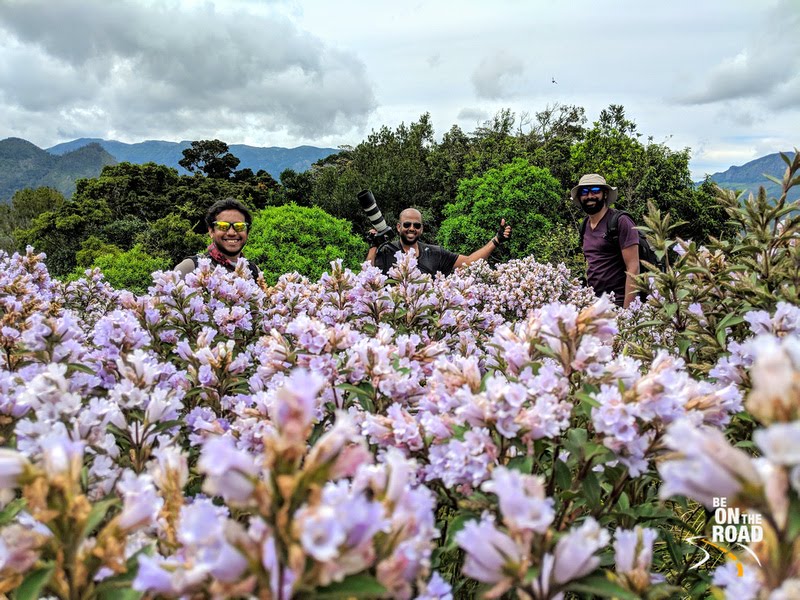
The boys have finally chased the Neelakurinji and this is at a place of a mass bloom

Ever since we returned from our dream Neelakurinji holiday, my friends and I have been bombarded with questions on this rare flower, where to see it, how long it will stay like this, does it require trekking and so on and so forth. As much as we love to connect with people, I think it becomes pretty difficult to keep answering the same questions. Hence, I have prepared this detailed guide to help you plan your dream Neelakurinji holiday.

What NOT TO DO on your Neelakurinji holiday?

Picking up trash thrown by tourists at a Neelakurinji mass bloom site

Neelakurinji is found in a very fragile ecosystem in the Western Ghats. Hence, it is up to us to take care of it and ensure that it continues to bloom for the future generations to come. During our treks, we found cigarette buds, plastic water bottles, chocolate, biscuit and chip packet wrappers, beer bottles and many other things that should have never been brought to this ecosystem in the first place. I know that I am doing a disservice to mother nature by providing this detailed guide on the internet, but I hope you will help me offset the damage by promising to keep your Neelakurinji trips eco-friendly and if you can, do return with any trash that you find during your treks and flower visits. And most importantly, please do not stamp on the Neelakurinji plants or pluck the flowers. Both the plant and the flower are required for it to bloom again in the years to come. And a lot of bees and butterflies need the flowers to make their food and to do their pollination work. Also, the Neelakurinji only grows in the Western Ghats ecosystem between 1600 m to about 2400m, so don’t even bother to pluck the plant from the roots in a bid to plant it in your garden. The entire effort will be a big failure.

How long will the flowers continue to bloom?    
 
On a trekking trail near Vattavada to spot the Neelakurinji

If there are not much rains, the flowers should hold good till the 2nd or 3rd or may be even the 4th week of October. In rain shadow regions, where the flowers bloomed earlier, it might be on its way out. In the other regions, especially in Kerala, the flowers should hold good all through October. The first two weeks of October would be a great time to see the mass bloom, especially at places such as the Eravikulam National Park.

Where can I see these flowers?

Close up of the Neelakurinji flower

You can see the Neelakurinji flowers at a wide array of locations. These are the ones where I have seen them or where my friends have seen them:

1) Yellapatty, Kerala

2) Vattavada, Kerala

The Nilgiri Tahr and the Neelakurinji at Eravikulam National Park, Munnar

3) Eravikulam National Park, Kerala

4) Marayoor, Kerala

5) Kanthaloor, Kerala

The rolling Neelakurinji hills

6) Kodaikanal, Tamil Nadu

7) Kotagiri, Tamil Nadu

The Neelakurinji flowers and the gorgeous view of the Western Ghats

8) Thadiyendamol, Coorg, Karnataka

A green shola forest view

9) Pampadum Shola National Park, Kerala

10) Anaimudi Shola National Park, Kerala

11) Kurinji Mala Sanctuary, Kerala   
   
Which is the area of mass bloom?

One of the largest Neelakurinji bloom locations of 2018

I saw the best blooms near Yellapatty, Kollukumalai and Meesaipulimalai, the adjoining hills are also mass bloom locations. Eravikulam National Park is also a mass bloom location, but due to the recent Kerala floods, the blooms are lesser than the last time. Kanthaloor is also a good option. For photographers, I would totally recommend the Yellapatty location.

Is it safe to travel to Kerala?

Admiring the Neelakurinji mountain view

Yes. Kerala is well and truly back on track. The roads are back and all the hotels and people are ready to welcome you. The bright sunny weather has helped with the super quick bounce back.
   
What kind of permissions are required?

The blue Neelakurinji flowers right after a brief spell of rain

Most of the Neelakurinji blooms can be found on forest land or inside private properties where they border forest land. So, be prepared for some kind of permits. For Eravikulam National Park, Pampadum National Park, Anaimudi Shola National Park and Kurinji mala sanctuary, do go through Munnar wildlife forest department. For private places, do approach your hotel travel desk or local travel agents to help you arrange for permits, guides and any last mile logistics. If you do not wish to go through anyone, do strike conversations with locals to see if any Neelakurinji is blooming near their village, but this option is not much recommended unless you have a lot of time at hand.
   
Do I need to trek or walk to see the flowers?

The steep climb to reach the top of the Neelakurinji mountain

The mass bloom at Yellapatty certainly requires you to trek (about 4 kms and a lot of steep terrain). At Eravikulam National Park, you will have to walk a 1 km stretch of road (not too steep though). At meesaipullimalli, kolukkumalai and inside Pampadum Shola National Park, you will certainly have to walk a good bit to catch a sight of the Neelakurinji blooms. At many other places, do be prepared to walk at least a bit. However, there are places where you see the Neelakurinji right next to the roads. These are small roads in and around Vattavada and Pazha Thotthum and between Marayoor and Kanthaloor.
   
Which place can I make my base?

The Neelakurinji special moment

If luxury is your thing, Munnar is the best option. And if you are looking for a luxurious plantation holiday, I would recommend Windermere Estate, that is located just above the Munnar town at Pothamedu. This is where I stayed for 3 nights and I totally enjoyed their service and hospitality. Detailed property review to come soon.

The Neelakurinji slope and the tea estates

If you want the best of nature, I would recommend staying inside the forests and national parks. Munnar Wildlife department offers simple, yet extremely scenic cottages and forest bungalows inside Eravikulam National Park, Pampadum Shola National Park, Anaimudi Shola National Park and Chinnar Wildlife Sanctuary. All bookings can be made online at Munnar Wildlife website. This option is ideal for nature and wildlife enthusiasts and not for people who are looking for barbecues, camp fires, late night parties and lots of nightlife.

If you wish to stay in tents that are located right beside the Neelakurinji blooms, look up the Cloud Farm camping site at Yellapatty. Do refrain from smoking, drinking, trashing and any other activity that will cause damage to this fragile ecosystem. This camping site is located right next to forest land and hence this request.

Admiring the Neelakurinji photos while sitting amidst one of the largest blooms of 2018

If you are looking for authentic homestays, I would recommend staying in properties located on the Marayoor – Kanthaloor road or the Yellapatty – Vattavada road. These places enjoy great location, are totally away from the tourist circuit, are real close to the Neelakurinji blooms and can be booked easily via Airbnb or directly through the homestay websites.

Which is the best route?

Waterfall amidst the forests - enroute to Munnar from Marayoor

I would recommend the scenic Udumalpet – Munnar forest highway if you are traveling by road from Bangalore, Chennai, Hyderabad or any other place in Tamil Nadu. For people traveling from Kerala, take the Kochi- Munnar mountain highway or the smaller highway from Idukki.

Which is the nearest airport?

The scenic motorcycle ride through Vattavada while looking for the Neelakurinji flower

Kochi and Coimbatore would be the nearest airports. 
   
Any words of advice?

The Neelakurinji mass bloom at Yellapatty, Kerala

Do remember to carry the following items with you:

1) A good camera to capture a once in a 12 year moment

The year of the Neelakurinji - 2018

2) A good pair of walking shoes to keep you comfortable

3) Sunscreen, a good pair of sunglasses and may be a wide brimmed hat to protect you from the mountain sun

The land of the tea estates

4) A bottle of water to stay hydrated during your walks

5) A rain jacket to keep you dry from the unpredictable mountain weather. This can also come in handy for those chilly evenings and mornings. You can also carry separate warm wear, if you wish.

The totally surreal Neelakurinji view - you just don't want to leave this place

You might encounter leeches during your forest walks. Walk fast and keep your emotions in check, else you might not be able to enjoy the Neelakurinji bloom the way you want to.

The Neelakurinji flowers and the beautiful view that they enjoy

Again, the Neelakurinji grows in a very fragile ecosystem that is full of amazing flora, fauna, shola forests and rolling hills. Hence, it is our responsibility to take care of this ecosystem. I hope you enjoy your dream Neelakurinji holiday. I certainly did and I would definitely recommend it to everyone!

Continue Reading...

Wednesday, September 26, 2018

Udumalpet to Munnar Forest Highway: Perfect Route for your Neelakurinji Holiday

The Neelakurinji slope at Yellapatty, Kerala

There might be another 30 to 45 days to see the rare Neelakurinji flower before it disappears for another 12 years. I have just experienced the mass bloom of this neelakurinji flower up close and I totally recommend that you experience this surreal spectacle too.

Waterfall amidst the forests - enroute to Munnar from Marayoor

In case you are planning a road trip to the Neelakurinji region of Kerala and Tamil Nadu, I would heavily recommend taking the scenic forest highway from Udumalpet (Tamil Nadu) to Munnar (Kerala). Ideal for all those driving from Bangalore, Chennai, Salem, Erode, Coimbatore and other places in Tamil Nadu and Karnataka, this route offers the perfect mix of narrow winding mountain roads, pristine nature, fewer vehicles, stunning views of tea estates and shola forests and easy access to many wildlife sanctuaries and national parks.

Enjoying the beautiful forest view during a pit stop near Munnar

This forest highway takes you through or by the following wildlife sanctuaries and national parks – Anaimalai Tiger Reserve, Chinnar Wildlife Sanctuary, Marayoor Sandalwood forest, Neelakurinji sanctuary, Anaimudi Shola National Park and Eravikulam National Park. The mountains near Marayoor, Kanthaloor (which is part of the Anaimudi Shola National Park and Neelakurinji sanctuary) and Eravikulam National Park are three places that fall on this route and where the Neelakurinji is currently blooming.

Entering the mountains of Munnar from Marayoor, Kerala

And once you reach Munnar, you can drive or ride all the way to Yellapatty, Kollukkumalai, Mesapulimalai, Vattavada and Pampadum Shola National Park for more neelakurinji blooms and different experiences.

Perfect conditions for a monsoon holiday to Munnar, Kerala

This forest route not only gives you easy access to the Neelakurinji, but the journey in itself is a special experience as it takes you through lush forests, busy wildlife and birds, stunning tea estates, umpteen waterfalls and gorgeous mountains all the way from Udumalpet to Munnar, which is about 88 kms in total.

My Custom Motorcycle and a Bright Bouganvilla bush

For those looking for authentic Kerala homestays on this route, Marayoor is a good option. For a true village experience, Kanthaloor is your bet. And if you wish to see the endangered Nilgiri Tahr up close, Eravikulam National Park is your bet. And for all modern day luxuries, creature comforts and divine weather, you have Munnar.

The gorgeously green shola forests of Yellapatty, Kerala

Wherever you opt to stay and whatever you opt to do, this Udumalpet – Munnar forest highway offers you a thrilling experience filled with gorgeous nature. So, go on, set your sights on a Neelakurinji mass bloom and explore and enjoy the rest of Kerala, which is eagerly waiting to show the world that it is all ready after the epic floods of August 2018.

Continue Reading...

Tuesday, September 25, 2018

On Top of the Neelakurinji Mountain

The Neelakurinji forest view at Yellapatty, Kerala

I saw the rare Neelakurinji for the first time in my 36 years on this planet and it was possibly the very first time that I was completely lost for words. Such was the beauty of the Neelakurinji mass bloom! This flowering plant defies gravity, enjoys some of the best views in the Western Ghats and prefers steep slopes at pretty high altitudes.

The boys have finally chased the Neelakurinji and this is at a place of a mass bloom

Over 10 days, 3 of us rode through the mountain roads of Kerala in search of this once in a 12 year spectacle and I have to say that we found this flower blooming almost everywhere. The recent heavy rains in Kerala and the ensuing Kerala floods certainly played their part in delaying the bloom, but thankfully, the flowers are resilient and are now blooming all across Kerala and neighbouring Tamil Nadu.

The Neelakurinji flowers and the gorgeous view of the Western Ghats

We trekked high and far to get real close to the flower. Eravikulam National Park, Vattavada and Kanthaloor are good spots for those looking to simply see the bloom from a bit far away, but without having to walk much. To see the mass bloom, you will have to trek at least a few hours over some steep terrain, but it will be totally worth the effort. Such a location is Yellapatty ( about 28 kms from Munnar on the Munnar – Top Station highway) where the mass bloom site is right above and below the Cloud Farm camping site. The entire hills are covered with this blue flower.

The Neelakurinji slope at Yellapatty, Kerala

What I found during these different visits are that there are quite a few species of the Neelakurinji, that they come in different colors and sizes, that the entire plant dries up after the bloom and that the honey made from this rare flower has a lot of medicinal properties. And the flower is indeed a shade of blue, but the color feels like pink, purple or white depending on the time of the day, the harshness of the Sun and the angle at which you are viewing it from.

Enjoying the view of the Western Ghats while sitting on the Neelakurinji mountain - Yellapatty, Kerala

This flowering plant, which grows alongside shola forests, is certainly a treat to the eye and the senses. While it doesn’t have a lot of fragrance, it certainly attracts a lot of bees, who seem to be enjoying the once in a 12 year feast.

Neelakurinji adorning the entire slope of the Yellapatty mountain

I have a lot of pictures, videos and experiences to share with you from this special Neelakurinji motorcycle trip. Right now, I am post processing all of them as fast as I can. This is just a sample of the pictures that have been clicked. So, do stay tuned for a series of Neelakurinji posts over the next week.

One of the largest Neelakurinji bloom locations of 2018

Note:
Kerala is well and truly back on track. Most people are still worried, hence there are hardly any crowds. This is the best time to see the Neelakurinji in Kerala. Munnar could be a potential base, while having a vehicle at your disposal could allow you to be mobile and explore the various Neelakurinji regions located in the mountains around Munnar.

Continue Reading...

Tuesday, September 11, 2018

Upcoming Travels: Chasing the Neelakurinji

One of my most awaited trips of 2018, I can’t tell you how happy I am packing my bags. After all, I am going to see the flower that blooms once every 12 years. Yes, I am talking about the iconic Neelakurinji, the flower that lends its name to the Nilgiris or Blue Mountains and that last bloomed in 2006. It is found in the shola forests all across the Western Ghats, but some of its prettiest views are found in and around Munnar.

I had initially planned this trip for end of August, but due to the devastation caused by the Kerala floods, I had to reschedule my date with the Neelakurinji. The highways have been repaired and the flower is blooming all over Eravikulam National Park, Anamudi Shola National Park and Kurinjimala Sanctuary across Rajamala, Vattavada, Kanthaloor and Marayoor, all at a short drive from Munnar city centre.

3 riders on 3 motorcycles will be riding from Bangalore to Munnar and will be chasing the Neelakurinji flower from Marayoor to Vattavada to Kanthaloor to Eravikulam to Kodaikanal over 10 days. There will be lots of Neelakurinji chasing to get the best pictures at the various locations, some bit of off-roading, offbeat trails and good ‘ol relaxation. In between all the Neelakurinji visits, we plan to indulge in some nature and birding at the Thattekad bird sanctuary and explore some of the other attractions in this region.

As this will be the first time I set my eyes on this rare flower, I don’t have any pictures to share with you, but do stay tuned to my social channels for live updates from the world of the Neelakurinji. As there will be good connectivity where I will be staying, I intend to be quite active with my updates. I am pretty sure that you will not mind the overdose of this rare flower from God’s Own Country and the Blue Mountains. May be, my trip will entice you to plan your very own date with the Neelakurinji or you could wait till 2030!

Cheerios and see you from the land of the Neelakurinji!

Continue Reading...

Tuesday, September 08, 2009

The Nilgiri Tahr lives on at Eravikulam National Park, Kerala!

An event of days gone by...last December during my solo all india motorcycle journey...


Eravikulam National Park, the abode of the Nilgiri Tahr is located in the high ranges of the southern Western Ghats in Idukki district, 15 km north of Kerala's tea town of Munnar.


I had ridden to Munnar from Tamil Nadu. It was a nice bright and sunny day when I made my way to the tourism zone of the Eravikulam National Park, which is located at Rajamallay, to the south-west of the park, on the Munnar-Udumalpet Road (SH 17). I bought my entry tickets at the check post here and was taken in a forest department bus through a small estate road to the Interpretation centre, a distance of 5 km from the check post below.


From here, all tourists are allowed to walk along the road for a distance of 1 km. To go beyond this, one needs special permission from the forest department as this national park is pretty sensitive to the survival of the Nilgiri Tahr, locally referred to as varai-aadu (literally hill-goat).


As you would guessed by now, the star attraction here is the Nilgiri Tahr, whose population here is about 2,500. The Nilgiri Tahr is endemic to the Western Ghats and is listed in the IUCN Red List of Threatened Mammals. The primary purpose of this sanctuary, spread over 97 sq km and declared a national park in 1978 is to protect the Nilgiri Tahr. The Nilgiri Tahr prefers hilly terrain at an altitude of 2,000 to 3,500 m.


The 1 km long tourist walk that I mentioned earlier is dotted with small puddles of water fed by the forest department. When the sun is high in the sky, the Nilgiri Tahr makes its way to these water puddles to quench its thirst. And as the case was, I sighted a lot of Nilgiri Tahr grazing, sitting, drinking water on the slopes of the hills. Now, at first glance, looking at its eyes and horns, the Tahr, might look a menacing creature. But, upon a closer look, one will find out that they are very timid and shy. I was appreciating this beautiful animal when I was irritated by the cacophony created by the tourists who were trying to manhandle these animals. Why don't tourists understand that they are in a wildlife sanctuary and they are disturbing the peace of the "wild" by treating it like a zoo. I was so annoyed at these tourists that I took matter into my own hands and fed them with a scary thought. I said, "Look at those horns - see how sharp they are; what if you get whacked by these sharp horns on your back side :-); the nearest hospital is 25 kms away!!"Upon hearing and digesting this thought, people seemed to back off a little. I felt happy at having slightly solved the situation!

A nature lover like me, my anger melted into peace as I absorbed the waves of grasslands that surrounded me in all directions. This green bed is such a pleasing sight. These grasslands of Eravikulam are called 'climax' grasslands because scientists believe that they represent the culmination of evolution. Interspersed in these vast stretches of grass are little pockets of sholas, the Tamil word for forest, which are storehouses for vitality.


From the place where I was standing, I could also sight the neatly laid out tea plantations of Munnar (refer the picture on the left).  The entire landscape invigorated my senses. That is when I realized that this terrain would have been much prettier before these grasslands were replaced with tea plantations, a cash crop, during the British times. I agree that the tea plantations offer livelihood to the community and provide $$$ as a cash crop, but they have jeopardised the eco system. For e.g., elephants, as we know, migrate from drier to wetter terrain every year in search of food and greener pastures and the Munnar tea gardens come in their way. This is what leads to the human-elephant clash, human beings being squashed by elephants in anger and elephants being shot by the angry humans. What we need to realize is that we need to study the ecology of the terrain and identify ill-effects before starting an industry next to a eco-zone.

Now, an interesting fact about this national park and these hills of Munnar that elevates the beauty to an un-proportional level is the "Neela Kurinji". The entire 1 km tourist walk area is dotted with sign boards that revels in this piece of information. Neela Kurunji (Phlebophyllum kunthianum or Strobilanthes kunthiana) is a shrub that grows abundantly at Eravikulam and the adjoining Western Ghats. This shrub flowers once in 12 years and covers the entire green world around into colours of mauve or violet or blue. It last bloomed in 2006.

So, remember to visit this place in September or October 2018 to witness this heavenly sight. I have already book marked my 2019 calendar with this event!! A rare heavenly event!!!

To see India through the eyes of a motorcyclist's lens, visit the album below.

my solo all-india motorcycle journey


Reblog this post [with Zemanta]

Continue Reading...
Logo Credits : Jobi T Chacko. UI/UX Credits : Murugan S Thirumalai
Copyright © 2009-2026 Sankara Subramanian C (www.beontheroad.com)
Reproduction without explicit permission is prohibited. All Rights Reserved

Join the Travel Club for FREE!!
and every fortnight get in your inbox...interesting experiential and off-beat travel stories , destination guides, handy tips (travel, photography and visa) based on personal experience, global vegetarian delights with helpful survival guides and gorgeous world travel images and videos as I (the Indian traveler) trot the globe! And a lot of other travel invites and soon to be launched goodies !

* indicates required
Close