Samburu Tribe - Be On The Road | Live your Travel Dream!
none

Tuesday, April 05, 2022

The Colourful Samburu Tribe of Kenya: A Travel Photo Series
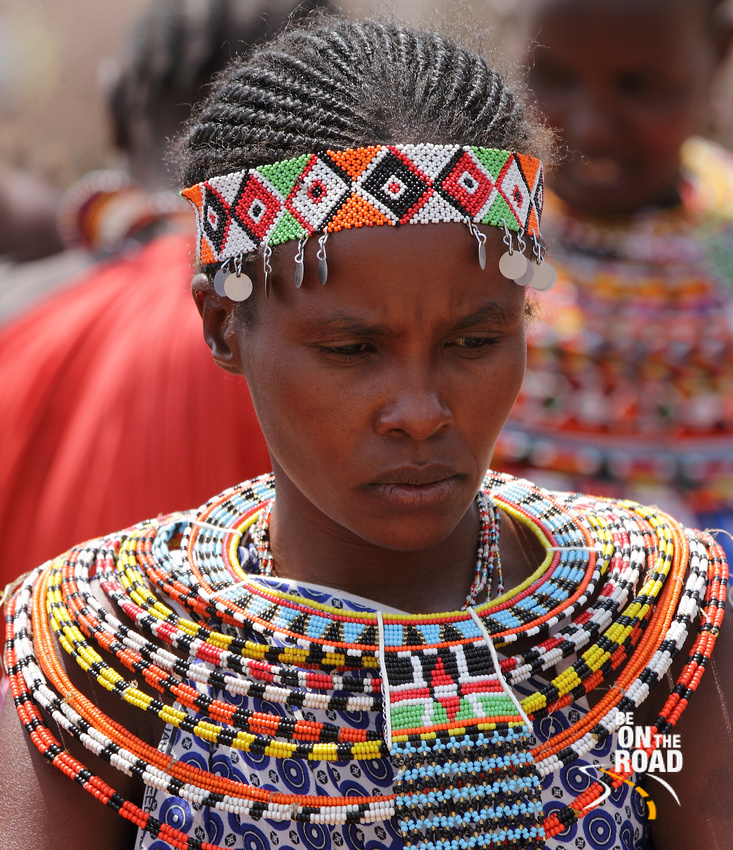
A Beadwork Samburu Model, Kenya

They are related to the famous Maasai tribe living in the Maasai Mara game reserve in Kenya. They are one of the more dominating tribes of north-central Kenya. They are semi-nomadic pastoralists who mainly herd cattle, but also keep sheep, goats and camels. I am talking about the colourful Samburu tribe who live north of the equator in Kenya and live in very diverse and beautiful landscapes that span high altitude forests, open plains, semi-arid grass and bush land to complete desert. One of their main settlements is on the fringes of Samburu National Park in North Kenya and this is where I met them. Experiencing the Samburu National reserve and the Samburu tribe becomes a beautiful one-two combo for a rich wildlife and culture experience.

This travel photo series aims to share with you the colourful personalities and traditional life of the beautiful Samburu tribal people. Hope you enjoy these vibrant visuals of these gorgeous tribal people of Kenya.

Above picture: The Samburu tribe is known for its colourful beadwork jewellery. Here you can see a Samburu woman wearing such colourful head and neck bead jewellery.

A Portrait of a Samburu Man

Above picture: Samburu men also adorn themselves with such colourful bead jewellery making them fantastic looking male models too.

Exquisite bead work on this Samburu woman

Above picture: Here is another Samburu tribal woman sporting colourful beadwork necklace, ear rings and head gear. The concentric rings on the necklace makes her look similar to the long necked Karen tribal women of Myanmar, but thankfully their necks have not been lengthened.

This game played with seeds and compartments is only played by the elderly men of the Samburu tribe

Above picture: Seen in this photo is a game with seeds and compartments played only by the elderly men of the Samburu tribe. This game is very similar to Pallanguzhi, a traditional ancient mancala game played in South India, especially Tamil Nadu and Kerala.

A rich dash of colour on all the Samburu women

Above picture: It is said that the more beads or necklaces are there on a woman, the more beautiful she is considered. Another point on the same line of thought is that, women wore more necklaces as they got richer. Therefore, the number of beads or necklaces indicate status in society, richness level and beauty.

Inquisitive Samburu looks

Above picture: The Samburu people speak the Samburu language, which is a Nilo-Saharan language. Their language is more or less similar to Maa (the language that the Maasai speak). The Samburu tongue is also related to Turkana and Karamojong and more distantly to Pokot and the Kalenjin languages.

Young Samburu Kids strike different poses

Above picture: Like all kids, the Samburu kids are also full of energy and innocent smiles. They can be seen wearing Western attire.

Samburu Elders huddle together under a tree to play a game

Above picture: The elders occupy a very important role in the Samburu society and all the power rests with them. They have a polygamous system where the elders decide who can marry and can have how many wives. This kind of control keeps trouble at rest or at least that is the belief.

The Samburu Warriors strike a pose

Above picture: In the Samburu tribe, the men take care of security, cattle herding and playing mock fight games to improve their warrior skills.

The colourfully decked Samburu tribals

Above picture: While the Samburu women take care of things like building houses, collecting firewood and food from the forest, cooking food, taking care of the young ones and in doing craftsmanship.

Wedding dance enacted by the Samburu men and women

Above picture: The Samburu love to sing and dance, but traditionally use no instruments. They have dances for various occasions of life. The men dance jumping and high jumping from a standing position is a great sport. Most dances involve the men and the women dancing in their separate circles with particular moves for each sex, but coordinating the moves of the two groups. A lot of their dances involve elaborate movements of their chest.

A Mean Samburu Warrior look

Above picture: Girls get married pretty early. Sometimes before they turn 18. Both boys and girls go through an initiation into adulthood, which involves training in adult responsibilities and circumcision for boys and clitoridectomy for girls. Ouch!

Samburu Women welcome the tourists into their village

Above picture: If you wish to marry a Samburu woman, all you have to do is give the chief of the village 2 cows. That is how weddings happen in the Samburu culture.

Women work much harder than the men in the Samburu community

Above picture: The hard working Samburu woman. She works in the forest, inside the house and in the manyatta or settlement.

A Samburu house made from wood, mud and plastic (for the roofing)

Above picture: A typical Samburu house is built by the wives of that house using sticks, mud, dung and plastic (for waterproofing).

Continue Reading...

Monday, November 05, 2012

Samburu Music and Dance

The Samburu People of North Kenya have some very unique and interesting traditions and they really look colorful against the dry arid land tones. In my earlier posts, I had showed how colorful they are through some tight portraits and had also explained in detail their complex traditions, behavioral patterns and lifestyle.


In this post, I wanted to share a video which showcases a short dance of theirs with some of their own music. This dance looks similar to the jumping dance of the Maasai people, but has its own unique flavor in some places and especially in the voice over and background music.

Continue Reading...

Thursday, September 06, 2012

Understanding the Samburu Tribe of North Kenya

The Samburu tribe is one of the more dominating tribes of north-central Kenya. The Samburu developed from one of the later Nilotic migrations from the Sudan, as part of their plains Nilotic movement. They are related to the Maasai, share a few traditions, but are overall pretty distinct from each other. I got a chance to meet them in their society, talk to them, interact with them and understand their culture when I was at the Samburu National Reserve in North Kenya.

Exquisite bead work on this Samburu woman
The Samburu are semi-nomadic pastoralists who herd mainly cattle, but also keep sheep, goats and camels. They live north of the equator and live in very diverse and beautiful landscapes that spans high altitude forests, open plains, semi-arid grass and bush land to complete desert.

Samburu Elders huddle together under a tree to play a game
The elders occupy a very important place in the Samburu society and all the power rests with them. They have a polygamous system where the elders decide who can marry and have how many wives. This kind of control helps keep trouble at rest or at least that is the belief.

This game played with seeds and compartments is only played by the elderly men of the Samburu tribe
In the Samburu society, the men take care of security and cattle-herding, while the women take care of things like building houses, collecting firewood and food from forest, cooking food, taking care of young and in doing craftsmanship. In their own terms, a Samburu woman is much more hard-working than a Samburu man.

The Samburu Warriors strike a pose
Since the Samburus’ practice polygynous marriage, their settlements or manyattas mirror this setup. Each manyatta might have 4 or 5 families and within each family, there might be multiple wives who live in their own house, which they build on their own using sticks, mud, dung and plastic (for waterproofing).

The colourfully decked Samburu tribals
The entire manyatta is surrounded by a acacia thorn bush fence to prevent the people and their cattle from predators. The cattle are again surrounded by a second layer of thorn fence in the center of each manyatta. One or two Samburu men would keep watch every night and protect the entire village.

Wedding dance enacted by the Samburu men and women
Traditionally, the Samburu people have completely survived off the products of their herds. However, decline in cattle numbers, less rains and increased tourism has meant the  Samburu people have gotten more into the tourism industry working with various wildlife resorts, the forest department and related companies. Some of them have also gone out to large cities such as Nairobi and Mombasa to find other sources of employment.

Beautiful Samburu Women: All you need to do is offer the chief of the tribe 2 cows and you can get any of them as your bride :-)
The Samburu people speak the Samburu language, which is a Nilo-Saharan language. Their language is more or less similar to Maa (the language that the Maasai speak). The Samburu tongue is also related to Turkana and Karamojong and more distantly to Pokot and the Kalenjin languages.

Samburu men make a fire by rubbing two types of stick over dried donkey dung
Today, a lot of them speak Swahili and English to make utmost use of the opportunities to make money. Slowly, but steadily, schools are being developed for a cluster of villages to ensure that the Samburu kids get quality education in both Swahili and English.

Both Samburu Men and Women adorn rich colour
The standard food of the Samburu is milk from their cattle, blood taken from their cattle without killing them and wild foods. During festivals and certain times of celebration, they kill some of their cattle and eat their meat. Today, they consume some agricultural products like maize too. Tea with milk and sugar is their staple diet.

A sober looking Samburu man
The Samburu clothing is something that I found real interesting. Both men and women wear extremely bright colours. This may be because they want to add some life to the otherwise barren landscape or to make their dark skin glow. They adorn themselves with necklaces, bracelets and anklets.

A rich dash of colour on all the Samburu women
The warrior men cover their head in red ochre. The elders (both men and women) were clean shaven. The women wear numerous necklaces and bracelets and these ornaments are made from colorful beads (used to be colorful seeds a long time back). It is said that the more beads or necklaces are there on a women, the more beautiful she is considered. Another point on the same line of thought is that, women were more necklaces as they get richer. Therefore, the number of beads or necklaces indicate status in society, richness level and beauty.
 
A Portrait of a Samburu Man
During my visits, most of the men wore red cloths either around their waist or over their shoulder. Women, on the other hand wore floral and pastel designs. Though, with increased tourism and westernization, the Samburu people are also slowly taking to western attire.

Samburu Women welcome the tourists into their village
The Samburu love to sing and dance, but traditionally use no instruments. They have dances for various occasions of life. The men dance jumping and high jumping from a standing position is a great sport. Most dances involve the men and the women dancing in their separate circles with particular moves for each sex, but coordinating the movements of the two groups. A lot of their dances include elaborate movements of their
chest.

A Beadwork Samburu Model
If you do get to visit them, you will come across this statement: Do you wish to marry one of our Samburu girls? All you have to do is give the chief of the village 2 cows. That is how weddings happen in the Samburu culture.

Inquisitive Samburu looks
Girls get married pretty early. Sometimes before they turn 18. Both boys and girls go through an initiation into adulthood, which involves training in adult responsibilities and circumcision for boys and clitoridectomy for girls. Ouch!! 

Women work much harder than the men in the Samburu community
The Samburu people are very homely and kind and it hurts me to see them struggle. So if you do visit them, be your generous self. Any donation, however small will help this community give good education and food to its kids while keeping its traditions intact.

Continue Reading...

Wednesday, August 29, 2012

Samburu Tribals: Some People Photographs

The Samburu tribals are semi-nomadic cattle herders who live north of the equator in Kenya. They are related to the famous Maasai of Maasai Mara, but have their own traditions. Recently, I got to meet them while exploring the Samburu National Reserve. And I have to say that they are quite a sight with their bright attire, hair-do, bead work and customs.

A shy but beautiful Samburu woman

Here are some people photographs I took during that visit. I plan to write in more detail about them in my upcoming posts. Do stay tuned for that.

A handsome young Samburu

Samburu Women Portraits

Young Samburu Kids strike different poses

A Mean Samburu Warrior look

Continue Reading...
Logo Credits : Jobi T Chacko. UI/UX Credits : Murugan S Thirumalai
Copyright © 2009-2026 Sankara Subramanian C (www.beontheroad.com)
Reproduction without explicit permission is prohibited. All Rights Reserved

Join the Travel Club for FREE!!
and every fortnight get in your inbox...interesting experiential and off-beat travel stories , destination guides, handy tips (travel, photography and visa) based on personal experience, global vegetarian delights with helpful survival guides and gorgeous world travel images and videos as I (the Indian traveler) trot the globe! And a lot of other travel invites and soon to be launched goodies !

* indicates required
Close