Tenkasi - Be On The Road | Live your Travel Dream!
none

Thursday, July 30, 2026

Thirumalai Murugan Temple, Panpoli: The Sacred Hill Shrine of Lord Murugan in Tamil Nadu

Lush setting of Thirumalai Murugan Temple, Panboli, Tamil Nadu

Nestled against the misty backdrop of the Western Ghats in Tamil Nadu’s Tenkasi district lies a sanctum of serene beauty and deep spiritual heritage: the Arulmigu Thirumalai Kumaraswamy Temple (popularly known as Thirumalai Kovil).

Perched roughly 400 feet atop a hillock shaped naturally like the sacred syllable ‘OM’, this 15th-century shrine overlooks an endless expanse of emerald coconut groves, paddy fields, and winding village roads. Positioned right near the Tamil Nadu–Kerala border, Thirumalai Kovil seamlessly blends rich Dravidian heritage with the untouched tranquillity of nature.

1. History & Sacred Legends

The steep flight of stairs that lead to the top of the Thirumalai Murugan Temple

The origin story of Thirumalai Kovil reads like an ancient mystical tale, deeply intertwined with kings, divine visions, and literature.

The Divine Ant Trail & The King of Pandalam

Around 600 years ago, a priest named Poovan Battar had a vivid dream. Lord Murugan appeared to him and revealed that an ancient idol of His remained hidden beneath a dense bamboo grove at a place called Kottaithiradu. The deity instructed the priest to follow a trail of ants to locate the exact spot.

Poovan Battar shared this revelation with the King of Pandalam. Together, they followed the miraculous line of ants deep into the hills, excavated the bamboo cluster, and uncovered the idol of Lord Murugan. The deity was subsequently installed atop the hill, where the present sanctum stands.

Echoes in Literary Antiquity

Long before the 15th-century temple structure was built, the hill itself carried spiritual significance:

a) Silappatikaram:
The classical Tamil epic refers to this region as Kaviramalai or Neduvelkundram, noting it as the path traversed by Kannaki on her journey toward Kerala.

b) Devotional Poetry:
The 15th-century saint Arunagirinathar visited this shrine and sang extolling verses in his masterwork, Thiruppugazh. Subsequent poets composed specialized Tamil works such as Thirumalai Kumaran Pillai Thamil and Thirumalai Murugan Kuravanji.

c) Nakshatra Significance:
Thirumalai Kovil is widely regarded as the primary Nakshatra Temple for individuals born under the Vishaka (Visakam) star. Devotees born under this star frequently make pilgrimages here for special blessings.

2. Architectural Marvel & Layout

Scenic Thirumalai Murugan Temple, Panboli, Tamil Nadu

Architecturally, the shrine demonstrates classical Pandyan Dravidian style, adapted thoughtfully to fit the contours of a hilltop.

Key Architectural Zones

a) The Twin Entrances:
The temple complex features a compact two-enclosure design. A three-tiered gopuram (entrance tower) marks the gateway to the outer enclosure, opening into stone-paved walkways lined with rock carvings.

b) The Sanctum Sanctorum (Garbhagriha):
Houses the main deity, Thirumalai Muthu Kumaraswamy, standing in a serene four-armed pose (chaturbhuja) holding the sacred Vel (spear).

c) Pillared Halls (Mandapas):
The Maha-Mandapa and Mukha-Mandapa feature hand-carved granite pillars depicting peacocks, warriors, and scenes from Murugan’s battles.

d) Thirumalai Kaali Amman Shrine:
Before entering the primary Murugan sanctum, devotees pay respects at the shrine of Goddess Kaali, the guardian deity of the hill.

3. Top Highlights & Spiritual Attractions

Coconut groves and the Western Ghats as seen from Thirumalai Murugan Temple, Panboli, Tamil Nadu

1) Poonjunai Theertham (The Sacred Spring)


Located adjacent to the main shrine is Poonjunai, a natural mountain spring tank. Legend holds that Sage Agasthiyar created this freshwater spring. To this day, a unique natural phenomenon occurs where water lilies and lotus flowers bloom daily in this high-altitude spring.

2) The 625-Step Pilgrimage vs. Scenic Ghat Road

Devotees can choose between two distinct routes to reach the summit:

The Traditional Steps:
A flight of 625 stone steps winds up the hill, passing small roadside shrines and offering fresh mountain breezes.

The Ghat Road:
For vehicles, a short winding hilltop road provides a drive through lush greenery with panoramic views of the valley below.

3) The Sacred Sthala Vriksham

The holy tree (Sthala Vriksham) of this temple is a venerable Tamarind tree growing atop the rocky terrain, under which specific meditative rituals are performed.

4. Key Festivals & Cultural Vibrancy

Gorgeous Thirumalai Murugan Temple overlooking the Western Ghats

a) Vaikasi Visakam
(May – June): The grand celebration of Lord Murugan's birth star. Special abhishekam and processions draw thousands.

b) Chithirai Step Festival (Mid-April): On Tamil New Year, devotees perform special prayers along the 625 steps.

c) Iypasi Skanda Sashti
(October – November): 10-day festival commemorating the divine victory over demon forces.

d) Thai Poosam (January – March): Grand 10-day temple chariot and Kavadi celebrations.

5. Travel & Practical Information Temple Timings

Popular photo shoot location at Thirumalai Murugan Temple

Morning Session:
6:00 AM – 12:30 PM

Evening Session:
4:00 PM – 8:30 PM

(Note: 8 daily poojas are conducted, starting with Thiruvananthal at 6:00 AM.)


How to Reach Panpoli

Nearest Town:
Tenkasi (~20 km) / Sengottai (~10 km).

By Train:
Tenkasi Junction (TSI) and Sengottai (SCT) are well connected to Chennai, Madurai, and Kollam.

By Air:
Tuticorin Airport (TTC) ~100 km; Trivandrum International Airport (TRV) ~110 km.

By Road:
Regular local buses and taxis run continuously from Tenkasi and Shencottah to Panpoli base.

Traveler's Tip: Visit during the early morning hours (6:30 AM – 8:30 AM). The mist rising from the Western Ghats, combined with the temple bells echoing across the Panpoli valley, creates a serene and memorable heritage experience.

6. Other nearby tourist attractions:

Lush greenery as seen from Thirumalai Murugan Temple

1) Achankovil Sastha Temple: Ancient healing temple located in the pristine forests of the Western Ghats

2) Mekkarai to Achankoil to Konni: Heavenly motorcycling route through pristine forest

3) Mekkarai: One of Tamil Nadu’s prettiest villages

4) Courtallam: The herbal bath holiday destination of Tamil Nadu

5) Sunderapandiapuram: Of lovely Brahmin agraharam houses, sunflower fields, windmills and mountain views

6) Puliyarai View Point: Scenic pit stop on the Tenkasi – Kerala highway

7) Sivasailam Temple: 1000 year old temple surrounded by the lush mountains of the Western Ghats

8) Sivasailam: One of the wettest places during the North East monsoon in India

9) Kambhavurutty Falls: Scenic waterfall holiday destination of Kerala

10) Manalar Falls: The herbal jungle waterfall of Kerala

11) Rosemala View Point: Gorgeous motorcycling route inside Shendurney wildlife sanctuary, Kerala

12) Ottakkal Weir View Point: Lovely pit stop on the Thenmala – Kollam highway

13) Palaruvi Falls: Kerala’s herbal waterfall that drops like milk from the sky

14) Aryankavu Saastha Temple: Ancient temple located in the sacred forests of the Western Ghats

15) Vintage Pathimoonu Kannara Bridge: Colonial charm of the Indian Railways

The Stunning Thirumalai Murugan temple amidst mountains and lush greenery

16) Punalur Suspension Bridge: Historical gem of Kerala

17) Lesser Known Kerala Mountain Railways: Treat for nature lovers

18) Thenmala Dam: A monsoon pit stop view

19) 13th Century Kasi Visvanathar Temple at Tenkasi

20) Kappil Beach: Sandy beauty hemmed in between the sea and the backwaters

21) Varkala Beach: The stunning cliff beach of Kerala where you can wash away all your sins

22) Meenmutty Falls inside Peppara Wildlife Sanctuary: A beautiful tropical jungle trail

23) Ponmudi: The offbeat hill station of Kerala with a 360 degree mountain panorama

24) Thenmala Forest: Offbeat nature and wildlife getaway

25) Agneeswarar Akhilandeswari Temple, Rajavallipuram: A hidden Shaivite treasure on the banks of the Thamirabharani river

26) Ammainathar Swamy Temple, Cheranmahadevi: The moon’s abode on the Thamirabharani

27) Thiruppudaimarudur Naramboonathar Swamy Temple: The living sentinel of the Thamirabharani

28) Bhaktavatsala Perumal Temple: The whispering stones of Cheranmahadevi

29) Vettuvan Koil at Kalugumalai: A timeless marvel of Pandyan rock-cut art

30) Chepparai Natarajar Temple: The original Tamara Sabha

Entering the Thirumalai Murugan Temple arena

31) Tiruchendur Murugan Temple: Seashore magic

32) Thamirabharani River Delta: A motorcycle route full of rustic gorgeousness

33) Nanguneri Vanamamalai Thothatrinathan Perumal Temple: 11th century Divya Desam temple of gargantuan proportions

34) Thirukkurungudi Nindra Nambi Perumal Temple: 8th century Divya Desam temple with stunning sculptures

35) Karisoolnthamangalam Chakrathalwar Temple: Scenic 1000 year old Vishnu temple located on the banks of the Thamirabharani river

36) Athalanallur Gajendra Varadharaja Temple: The location of the Gajendra Moksham legend

37) Harikesavanallur Ariyanatha Swamy Temple: A 1100 year old temple that is a Pancha Gurusthalam, a Kubera Sthalam and a Maandi Sthalam

38) Pattamadai Pai: GI tagged beautiful handwoven mats from a tiny Tamil Nadu village

39) Manjolai: The unknown hill station gem of India

40) Nalumukku: The wettest place of India during the North East monsoon

41) Kudrevetty: The gorgeous windy station of Kalakad Mundanthurai Tiger Reserve

42) Manimuthar Falls: The herbal waterfall inside a tiger reserve

43) Agastyar Falls: A gorgeous waterfall on the Thamirabharani river

44) Oothu: The quaint little hill station of Tamil Nadu

45) Kakkachi: The highest point inside Kalakad Mundanthurai Tiger Reserve

46) Scenic Iron Bridge of Kalakad Mundanthurai Tiger Reserve: Pristine nature overloaded

47) Karaiyar Dam: Offbeat wildlife and nature holiday destination in India’s deep South

48) Cycling through the backyards of Kalakad Mundanthurai Tiger Reserve

49) Mannarkoil Rajagopalaswamy Temple: Magnificent 10th century temple with an ashtanga vimana

50) 10th Century Brahmadesam Kailasanathar Temple: Lesser known architectural marvel of South India

51) 1000 year old Papanasanathar Temple: Where you can wash all your sins away

52) Kallidaikurichi: The village of the saaral season

53) Iruttu Kadai Halwa: Icon of Tirunelveli

54) Nellaiappar Temple: A 7th century cosmic dance wonder

55) 10th Century Valiswara Temple at Thiruvaliswaram: Hidden Chola gem in the Tirunelveli district of Tamil Nadu

56) Kallidaikurichi to Manimuthar Dam: A top scenic and rustic cycling route

57) Garudai Sevai from the agraharams of Kallidaikurichi

58) Festival of Thiruvathirai from a traditional Tamil Nadu village

59) Festival of Karthigai Deepam from a traditional Tamil Nadu village

60) Kallidaikurichi Adi Varaha Temple Chariot Festival: Grand cultural spectacle in rural Tamil Nadu

61) Kallidaikurichi Anaicut: Gorgeous picnic spot nestled in the lap of nature

62) Kallidaikurichi Sannadhi Street: Prettiest hotspot for Karthigai Deepam festival rural bonanza

Continue Reading...

Tuesday, October 21, 2014

A Trip to India’s Deep South

When someone talks of India’s Deep South, people connect it either with Kanyakumari or Kerala. While both these places are extremely beautiful in their own right, I believe that there are other lesser discovered places in India’s deep South that offer fabulous getaways and that need a mention here.

Golden Paddyfields ready for harvest
Thankfully for me, I belong to a village in India’s deep South called Kallidaikurichi (which literally translates into ‘at the foot of the hills’) and hence have been able to explore most of these places at length over my many visits to this region. This region is home to a tiger reserve, the Western Ghats, perennial rivers (a rarity in Tamil Nadu), lots of old temples, rich agriculture, waterfalls, delicious food, unique cultures, great countryside and authentic villages across the Tirunelveli district of Tamil Nadu.

Scenic Karaiyar Dam
Below is a good preview of these places that I have explored many a time, but this time during the long Dussehra weekend, I took my friends along on a road trip to these lesser explored places in Tamil Nadu.

Karaiyar Dam, Seraiyar Dam and Vana Theertham Falls
Karaiyar
Tucked amidst the mountains and forests of the Western Ghats, Karaiyar and Seriyar dams are one of the oldest in the state and support huge hydro electric power plants.

Colorful boats at Karaiyar Dam
They also offer beautiful scenes of the mountains and many waterfalls around it.

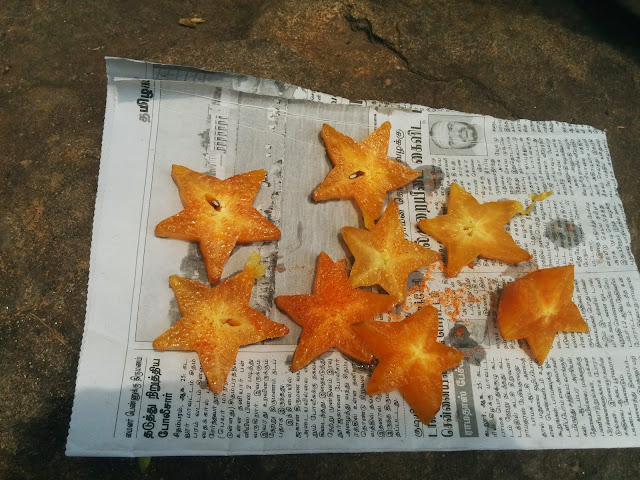
Local vendor selling star fruit and cucumber at Karaiyar
A famous picnic spot for the locals, one can go on a boat ride, explore the remote Vana Theertham Falls, have a local fish meal, do birding or watch the antics of the Grey Langurs that roam this belt in abundant numbers.

Kalakad Mundanthurai Tiger Reserve
Grey Langurs at Agastyar Falls
KMTR has to be one of the least known tiger reserves of India. As far as I know, this place is home to more than a 100 tigers, but the tourist infrastructure is very limited here. But, for some, that might offer true wildlife adventure.

Grey Langur - its tail is longer then its body
You can get your permissions from the forest office in Ambasamudram, stay at one of the forest bungalows deep in the jungle, go on a jungle trek with the forest guide and see wildlife closer than ever.

Metal bridge in the Agastyar forests
And the best part is that there are no polluting jeeps or abused elephants. This is nature at its very best. Lion tailed Macaques, Elephants, Tigers, peacock, Birds endemic to this region, Nilgiri Langur, Gaur, Leopard and Gray Langur are some of the wildlife seen here often.

Old Courtrallam Falls, Main Falls, Five Falls and other Waterfalls
The waterfall town of Courtrallam
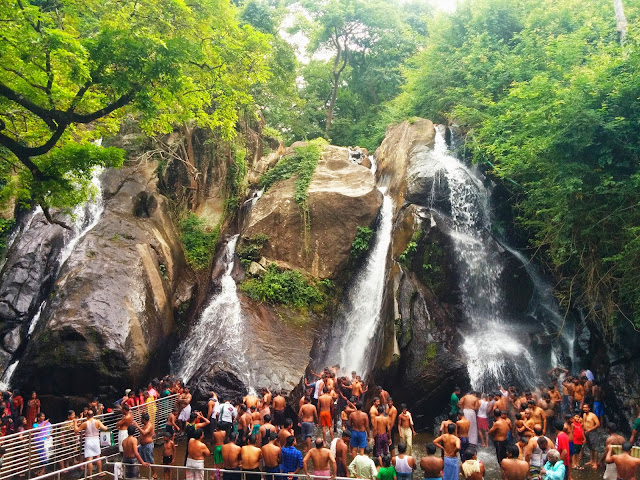
The people of South Tamil Nadu and Kerala swear by these waterfalls. Seasonal in nature, these falls are at their prettiest best during the South West monsoon. Facilities have been made for tourists (separate male and female sections with steel bars for protection) to have a shower under these 50 to 100 foot walls of pounding water.

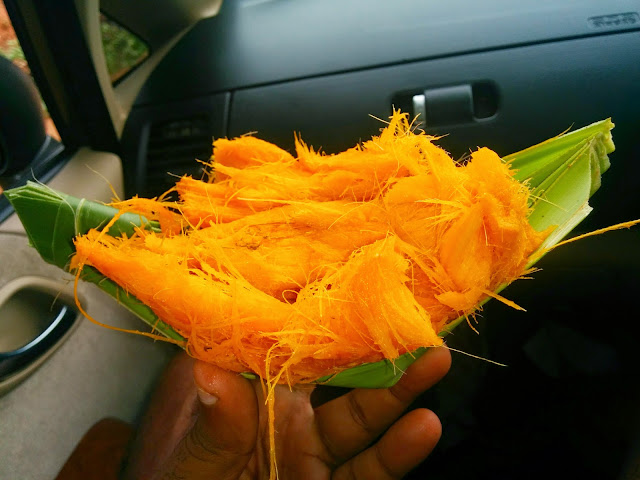
Colorful local fruit, but not so great tasting
It is believed that a bath under these waterfalls cures many ailments as the water passes through herbal forests. I can’t guarantee that, but can say that a good oil massage followed by 60 seconds under this waterfall, a heavy meal and a long sleep will make you feel like you have been re-born into this world.

Five Falls, Courtrallam
All these waterfalls again carry lots of water during the North East monsoon, but since the water is colder, only the adventurous go for a waterfall bath.

Old Courtrallam Falls
Chukku Kaapi after the waterfall bath is a must-have. If you wish, you can stay in hotels/homestays that are spread across this green region. Note: Try and avoid weekends and festival holidays as these falls will get crowded then with local tourists.

Kasi Viswanathar Temple from the Saaral City of Tenkasi
Kasi Visvanathar Temple Gopuram, Tenkasi
Known as the Kashi (Varanasi) of the South, Tenkasi is surrounded by the western ghats on three sides and is famous for its monsoon showers, which is locally referred to as the Saaral season. This city is known for its famous Kasi Viswanathar temple that boasts of the second highest gopuram in Tamil Nadu.

Natarajar at Kasi Visvanathar Temple, Tenkasi
It is one of those few Siva temples to have sannadhis for Shiva, Amman and Murugan. The special thing about this temple is the breeze as soon as you enter its main courtyard. The temple is beautiful and so are the traditional shops located around the temple.

Agastyar Falls
Small town of Papanasam, the Thamarabarani river and the Papanasam Temple
I think this waterfall in full flow is the most picturesque waterfall in the country. A perennial waterfall that starts somewhere in the Agastyar range of the Western Ghats, its waters seed the birth of the Thamarabarani river. A mighty waterfall, its waters tumble in many tiers and at one of the smaller tiers, one can take a bath.

Papanasam Shiva Temple and Thamarbarani River

Thamarabarani river at Papanasam
Papanasam literally translates into ‘killing all your sins’. It is believed that people who take a bath in the Thamarabarani river here and then offer their prayers to Lord Shiva at the neighbouring Papanasam Shiva temple, their sins will all be washed away.

Thavil artisan at work
The place exudes beautiful village charm if you meander away from the main state highway and towards the canals and paddy fields.

The Villages– Its Temples, Food, Kannadigan Canal and Rural Life
Traditional houses of Kallidaikurichi
Kallidaikurichi is known for its Appalams. Pattamadai is known for its handmade mats. Each village in this belt has a special story. Many of them - Kallidaikurichi, Ambasamudram, Subramaniapuram, Cheranmahadevi and others have been featured in many Tamil films. These villages are home to ancient practices and community, beautiful village temples, special food, green paddy fields, the famous Kannadigan irrigation canals and lots of oomph when it comes to rural life.

Walking through the small lanes of Kallidaikurichi
Let’s take my village, Kallidaikurichi as an example. The day begins with a bath in the Thamarabarani. Only the old who cannot make the walk to the river take a bath at home. The rest of the village goes to the river. After the river bath, people offer prayers to the river and canal temples en route. What follows next is good food, hard work in the fields and shops and a relaxed day in the village.

Nagasvaram and Thavil - traditional musical instruments of the south
The pace of life here is slow, but everyone knows the other by name. Temples are places of local gathering and always attract people in huge droves. One day it is the Pilayar Koil. The other day is the Lakshmi pati koil and then it is the Shiva temple. There is something happening almost every day.

Traditional Artist group at Lakshmi Pati Temple, Kallidaikurichi
Festivals are celebrated with gusto. All houses have a thinnai (portico) where people sit, talk about everything and while away time. The roads have changed from mud roads to concrete roads. The mode of transport has changed from bullock carts to cars. But, in spite of all these changes, the feel and culture of the village still remains.

Manimuthar Falls, Manjolai Tea Estates and Kudrevatti
About 30 minutes from Kallidaikurichi and deep in the Manimuthar range of the Western Ghats lies the Manimuthar Dam and the Manimuthar Falls. A very scenic belt, it comes alive during the rains and peacock dances can be seen almost everywhere. A great local picnic spot, it is also a great place for birding and to take waterfall showers. It is always less crowded than Agastyar and Courtrallam.

At a local railway crossing
Above Manimuthar Falls, lies the private tea estates of Manjolai and the beautiful hills of Kudrevatti from where you can see Trivandrum on a clear day. If you wish to explore these places on your own, you need to take prior permission from the forest officer at Ambasamudram. If you take a local bus, you do not need these permits, but then, you won’t have time to explore these places as there is only one bus to Manjolai and back. All this region also comes under the purview of the Kalakad Mundanthurai Tiger Reserve.

Tirunelveli – Halwa, Eateries, Nellaiappar and Shopping  
Crowd at Iruttu Kadai Halwa - iconic halwa store of Tirunelveli
Last but the least is the district capital itself that is known all over India for its famous Halwa. And hence, most Tirunelveli trips begin at the Nellaiappar Temple and the Iruttu Kadai Halwa shop located opposite it. The Iruttu Kadai Halwa is an iconic Halwa shop that opens every day at 5 pm in the evening (They make Halwa during the day) and sell their entire produce in less than 60 minutes. You can see people make a huge beeline well in advance to buy some halwa for themselves.

Nellaiappar Temple gopuram
The large Nellaiappar temple is situated in the crowded old town of Tirunelveli and is surrounded by all iconic stores of Tamil Nadu, which include Pothys, RmKV, etc. All these iconic stores originated in this city.

Shopping at Pothys, Tirunelveli
Shopping for traditional wear here is an experience in itself. And seeing the crowds in these shops prior to popular festivals like Navratri and Diwali is a sight that can be matched by very few shopping establishments around the world.

Arasan Bakery, Tirunelveli
When it comes to food, you will have to try out the biscuits, rusks, macroons and other bakery products at Arasan, one of Tirunelveli’s oldest brands. And Janakiraman for a delicious plate of vegetarian meals.

How to reach this region:
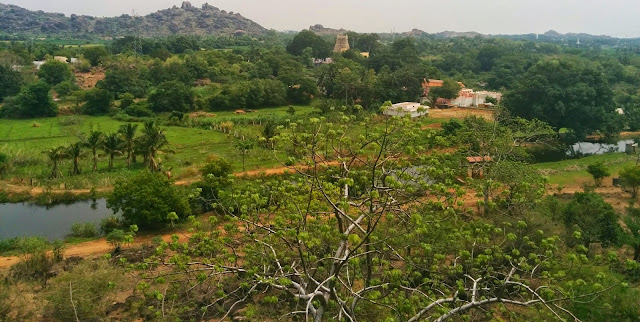
Staring at the beautiful Western Ghats from Karaiyar Dam
The nearest airport is Tuticorin (70 kms), but the one with the most connectivity is Madurai (190 kms). Buses and trains connect Tirunelveli with most of Tamil Nadu, Trivandrum and Bangalore. Public transport is available in the form of local buses, but it is better to have your own mode of transport especially if you are looking to explore the villages and the remote waterfalls.

Spicy Star Fruit at Karaiyar
P.S. All the pictures in this post have been clicked by my mobile phone (Nexus 5) camera. #mobilephotography
 

Continue Reading...

Friday, October 17, 2014

Travel Photo: Decked up Auto Rickshaw

We don’t need to travel much to see colorful scenes in India. In fact, we are so lucky to be a part of such a colorful nation that there is color almost everywhere. Around the end of Navratri came Ayudha Puja or Vishwakarma Puja where we worship all tools, machines and automobiles. On this day, we all would have noticed sparkling vehicles with flower garlands across most of our cities.

Colorful Auto Rickshaw on Ayudha Puja DayI was in the rural side of India’s deep south on this day and the people here they celebrate Ayudha Puja with a lot of gusto. They not only give their vehicles a sparkling wash and finish, but decorate it with flowers, banana stems and leaves, sandal paste, vermilion and much more. The idea is to treat your vehicle as a god and decorate it as how you would decorate god. This auto rickshaw in the picture above got a similar treatment in one of the villages in the Tenkasi district of Tamil Nadu. Don’t we love the colors of India?

Continue Reading...
Logo Credits : Jobi T Chacko. UI/UX Credits : Murugan S Thirumalai
Copyright © 2009-2026 Sankara Subramanian C (www.beontheroad.com)
Reproduction without explicit permission is prohibited. All Rights Reserved

Join the Travel Club for FREE!!
and every fortnight get in your inbox...interesting experiential and off-beat travel stories , destination guides, handy tips (travel, photography and visa) based on personal experience, global vegetarian delights with helpful survival guides and gorgeous world travel images and videos as I (the Indian traveler) trot the globe! And a lot of other travel invites and soon to be launched goodies !

* indicates required
Close